
Stepping into my kitchen, the smell of toasted coconut wafts through the air, instantly transporting me to a sun-soaked tropical getaway. Today, I’m thrilled to share my beloved recipe for Coconut Cake, a rich and fluffy delight that promises to elevate any occasion. Imagine two layers of moist cake, perfectly complemented by a tangy cream cheese frosting that brings a refreshing twist to every bite. This Coconut Cake is not just a showstopper; it’s surprisingly simple to make, making it an ideal choice for both seasoned bakers and bustling home chefs. Plus, it’s a piece of cake to prepare ahead of time—so you can spend more moments making memories and less time in the kitchen. Curious about how to whip it up for your next gathering? Let’s dive into the enchanting world of coconut goodness!
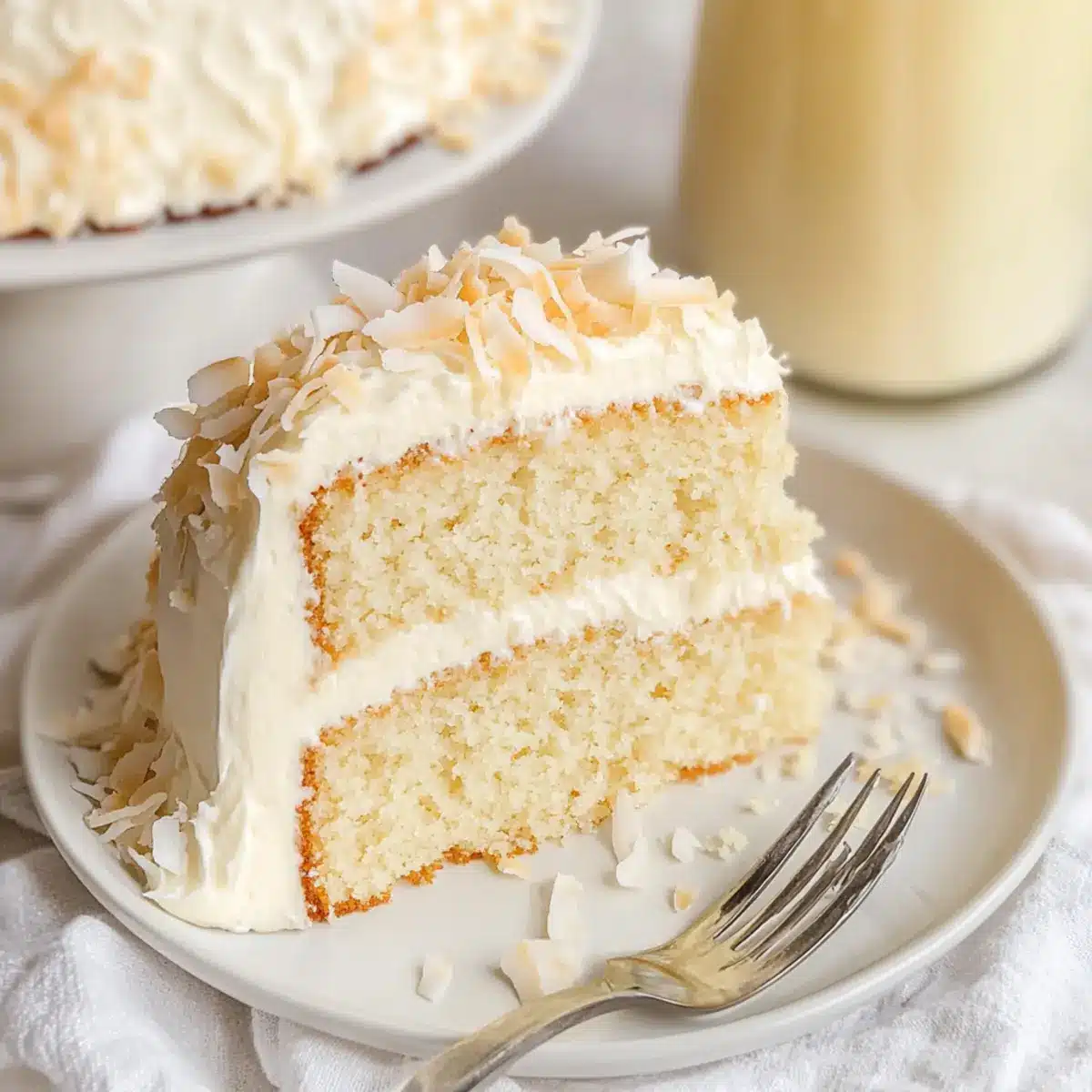
Why is this Coconut Cake a must-try?
Irresistible Flavor: Bursting with layers of rich coconut flavor, each bite transports you to a tropical paradise.
Easy to Make: The straightforward steps make it a breeze for anyone to whip up, whether you’re a pro or just starting out!
Perfect for Any Occasion: From birthdays to holiday gatherings, it’s a standout dessert that will impress your guests.
Versatile Options: Feel free to experiment with adding citrus zest or turning it into cupcakes to suit your style.
Make-Ahead Magic: Bake in advance and free up your day—this cake tastes just as delightful after a day’s rest.
Don’t forget to check out how to pair this cake with a scoop of ice cream for a delightful serving experience, or consider making [Crockpot Coconut Chicken](https://tasteryx.com/crockpot-creamy-coconut-chicken-tikka-masala/) for an extra tropical spread!
Coconut Cake Ingredients
For the Cake
• Unsweetened Shredded Coconut – Provides distinct coconut flavor and texture. Ensure it’s unsweetened for proper balance.
• All-Purpose Flour – Forms the structure of the cake. Can substitute with gluten-free flour blend.
• Baking Powder – Acts as a leavening agent to create a light texture.
• Baking Soda – Complements baking powder for leavening.
• Salt – Enhances flavor.
• Butter – Adds richness and moisture to the cake. Ensure it’s at room temperature for easy mixing.
• Granulated Sugar – Sweetens and contributes to the cake’s texture.
• Large Eggs – Provide structure and moisture. Use room temperature for better incorporation.
• Sour Cream – Adds moisture and a subtle tang. Can substitute with Greek yogurt for a similar texture.
• Full-Fat Coconut Milk – Enhances flavor and adds richness. Substitute with heavy cream if needed.
• Vegetable Oil – Keeps the cake moist. Can use canola oil or melted coconut oil.
• Vanilla Extract – Enhances overall flavor.
• Coconut Extract – Amplifies coconut flavor. Optional but recommended for stronger flavor.
For the Frosting
• Cream Cheese – Base of the frosting that adds a creamy texture. Use full-fat for best results.
• Powdered Sugar – Sweetens and thickens the frosting.
• Coconut Flakes – Used for decoration. Toasted for added flavor and texture.
Step‑by‑Step Instructions for Moist Coconut Cake with Cream Cheese Frosting
Step 1: Preheat and Prepare Pans
Begin by preheating your oven to 170ºC (340ºF). While it heats, line two 20 cm (8-inch) round baking pans with parchment paper for easy removal later. This will ensure that your Coconut Cake layers slide right out and maintain their lovely shape once baked.
Step 2: Combine Dry Ingredients
In a food processor, blend the unsweetened shredded coconut until finely ground. In a large mixing bowl, sift the processed coconut together with all-purpose flour, baking powder, baking soda, and salt. This step not only combines these ingredients but ensures that any lumps are eliminated, leading to a smooth batter.
Step 3: Cream Butter and Sugar
Using a stand mixer fitted with a paddle attachment, cream together the room-temperature butter and granulated sugar until the mixture becomes light and fluffy. This should take about 3-4 minutes. It’s essential for building a nice structure for your Coconut Cake, as air will be incorporated here, giving it a lovely rise.
Step 4: Add Eggs
Add the large eggs to the butter-sugar mixture two at a time, mixing well after each addition. This process should take an additional 2-3 minutes until the mixture appears smooth and thoroughly combined. The eggs provide moisture and stability, enhancing the cake’s luxurious texture.
Step 5: Mix in Dry Ingredients and Wet Ingredients
Gradually add about half of the dry ingredients to the mixer, mixing on low speed. Then, pour in the sour cream, full-fat coconut milk, vegetable oil, vanilla extract, and coconut extract. Mix until just combined before adding the remaining dry ingredients. This careful incorporation is crucial to avoid overmixing, which can toughen your Coconut Cake.
Step 6: Bake the Cake Layers
Divide the batter evenly between the prepared cake pans. Place them in the preheated oven and bake for 20-23 minutes. They’re done when a toothpick inserted in the center comes out clean and the tops are lightly golden. This step ensures your Coconut Cake layers rise beautifully and are moist.
Step 7: Cool the Cakes
Once baked, remove the pans from the oven and allow the cakes to cool in the pans for about 10 minutes. Then, transfer the layers onto a wire rack to cool completely. Cooling is essential to avoid melting the frosting during assembly and to keep the layers intact.
Step 8: Prepare the Cream Cheese Frosting
In a clean stand mixer, cream the softened butter until it is smooth and fluffy. Gradually add the cream cheese, mixing until fully incorporated. Then add the powdered sugar until the frosting reaches a smooth consistency. This creamy frosting will complement your Coconut Cake beautifully and provide that irresistible tang.
Step 9: Assemble the Cake
Once the cake layers are completely cool, place one layer on a serving plate. Spread a generous layer of cream cheese frosting on top, then place the second layer on top of the frosting. Proceed to frost the top and sides of the cake, smoothing it out with a spatula for a beautiful finish.
Step 10: Decorate with Toasted Coconut
To finish your Moist Coconut Cake, sprinkle the top and sides with toasted coconut flakes for added texture and a delightful crunch. This final touch not only enhances the cake’s visual appeal but also amplifies the coconut flavor, making every slice a tropical delight.
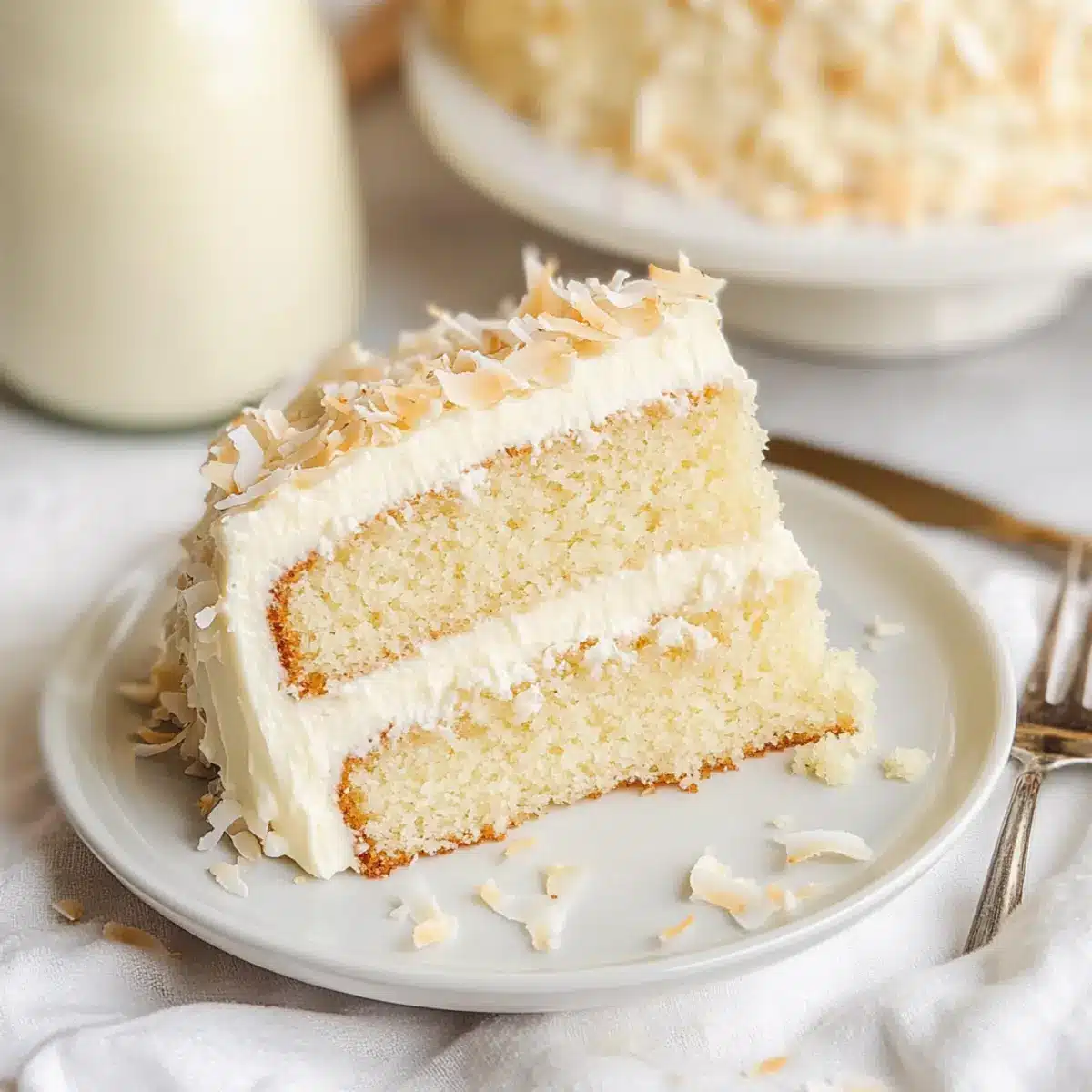
Coconut Cake Variations & Substitutions
Get ready to put your personal spin on this delightful Coconut Cake and make it uniquely yours!
- Gluten-Free: Use a gluten-free flour blend in place of all-purpose flour for a delicious gluten-free option.
- Dairy-Free: Swap butter with a dairy-free alternative and choose coconut cream instead of cream cheese for the frosting.
- Fruit Infusion: Add crushed pineapple or fresh mango in between the layers for a fruity surprise that perfectly complements the coconut flavor.
- Citrus Zest: Incorporate lime or lemon zest in the cake batter for a refreshing zing; it adds bright notes that lift the coconut essence.
- Cupcakes: Transform this recipe into scrumptious coconut cupcakes by adjusting the baking time to about 18-20 minutes; they’re perfect for parties!
- Chocolate Lovers: Drizzle a rich chocolate ganache over the frosted cake for an irresistible flavor combination that chocolate enthusiasts will love.
- Toasted Coconut Topping: For added texture, toast your coconut flakes before decorating the cake; the slight crunch creates a delightful contrast.
- Spice It Up: Add a pinch of cinnamon or nutmeg to the batter for a warm spice note; this twist gives your Coconut Cake an unexpected depth of flavor.
Feel free to explore these variations, and while you’re at it, why not complement this dessert with a scoop of vanilla ice cream? If you’re in the mood for a tropical vibe, make your meal complete with some [Crockpot Coconut Chicken](https://tasteryx.com/crockpot-creamy-coconut-chicken-tikka-masala/) and refreshingButter Pecan Cake`.
Expert Tips for Coconut Cake
-
Room Temperature Ingredients: Always use room temperature butter, eggs, and sour cream for a smooth batter. This helps in achieving that fluffy Coconut Cake texture.
-
Prevent Overmixing: Mix the batter just until combined after adding the dry ingredients. Overmixing can lead to a dense cake instead of a light and airy Coconut Cake.
-
Use Fresh Coconut: For the best flavor, consider using fresh unsweetened shredded coconut. It boosts the cake’s richness, but ensure to finely grind if necessary.
-
Check Cake Doneness: Use a toothpick to test for doneness—when it comes out clean, your cake is perfectly baked. Don’t skip this step to avoid overbaking your Coconut Cake.
-
Cool Completely: Make sure the cake layers are fully cooled before frosting. This prevents the frosting from melting and gives a cleaner finish.
-
Storage Tips: To keep your Coconut Cake fresh, store it in an airtight container in the refrigerator. It can last for several days, but its flavors are best enjoyed within the first few days.
What to Serve with Moist Coconut Cake with Cream Cheese Frosting
A delicious Coconut Cake deserves a delightful companion to create a memorable meal or celebration experience.
-
Creamy Vanilla Ice Cream: A scoop of vanilla ice cream balances the cake’s richness with its cool, creamy texture, making each bite heavenly. The contrast of temperature will delight your guests’ senses!
-
Tropical Fruit Salad: Fresh mangoes, pineapples, and strawberries offer a refreshing burst of flavor, enhancing the coconut theme. This vibrant dish adds a colorful touch to your dessert table.
-
Margaritas: A refreshing margarita brings a zesty kick to your meal. The lime notes perfectly complement the coconut flavor, elevating your dessert to a tropical fiesta.
-
Toasted Coconut Macaroons: For a double dose of coconut bliss, serve these chewy treats. Their chewy texture pairs beautifully with the moist cake and adds a satisfying bite.
-
Pineapple Upside-Down Cake: This classic dessert echoes the tropical theme, offering a sweet and caramelized flavor that harmonizes with the coconut layers, making your gathering a feast for the senses.
-
Coconut Milkshake: Blend up a creamy coconut milkshake for an ultra-tropical drink. Its rich flavor mirrors the cake’s taste while providing a refreshing, cool sip between bites.
-
Lemon Pound Cake: The tangy sweetness of a lemon pound cake cuts through the richness of the coconut, creating a delightful balance that your guests will adore.
-
White Chocolate Mousse: This decadent dessert brings a velvety texture to the table. Gentle notes of vanilla and sweetness will enhance the layered coconut flavors.
-
Sparkling Water with Lime: For a refreshing and non-alcoholic option, serve sparkling water with a slice of lime. It’s a light complement that cleanses the palate wonderfully.
-
Coffee or Espresso: A robust cup of coffee or a shot of espresso provides a perfect ending to your coconut-infused meal. The warm, bold flavors help to intensify the dessert experience.
Make Ahead Options
This Moist Coconut Cake is perfect for meal prep, allowing you to enjoy delightful homemade dessert without the last-minute rush! You can bake the cake layers up to 24 hours in advance; simply let them cool completely, wrap them tightly in plastic wrap, and store them at room temperature. The cream cheese frosting can also be prepared a day ahead—just refrigerate it, and allow it to come to room temperature when you’re ready to assemble. When it’s time to serve, layer the cooled cake with the frosting, and finish it off with toasted coconut flakes for a burst of flavor. This way, you can delight your guests with a gorgeous, tropical treat with minimal effort!
How to Store and Freeze Coconut Cake
Fridge: Store your Coconut Cake in an airtight container in the refrigerator for up to 5 days. This keeps the layers moist and the frosting fresh.
Freezer: If you want to save it for a later date, wrap the cooled cake in plastic wrap and then aluminum foil. It can be frozen for up to 3 months, maintaining its delightful taste.
Thawing: To thaw, move the wrapped cake to the refrigerator for 24 hours before serving. This will prevent it from becoming soggy.
Reheating: If you prefer a warm slice, gently microwave individual pieces for 10-15 seconds. But remember, this Coconut Cake is deliciously delightful served cold too!
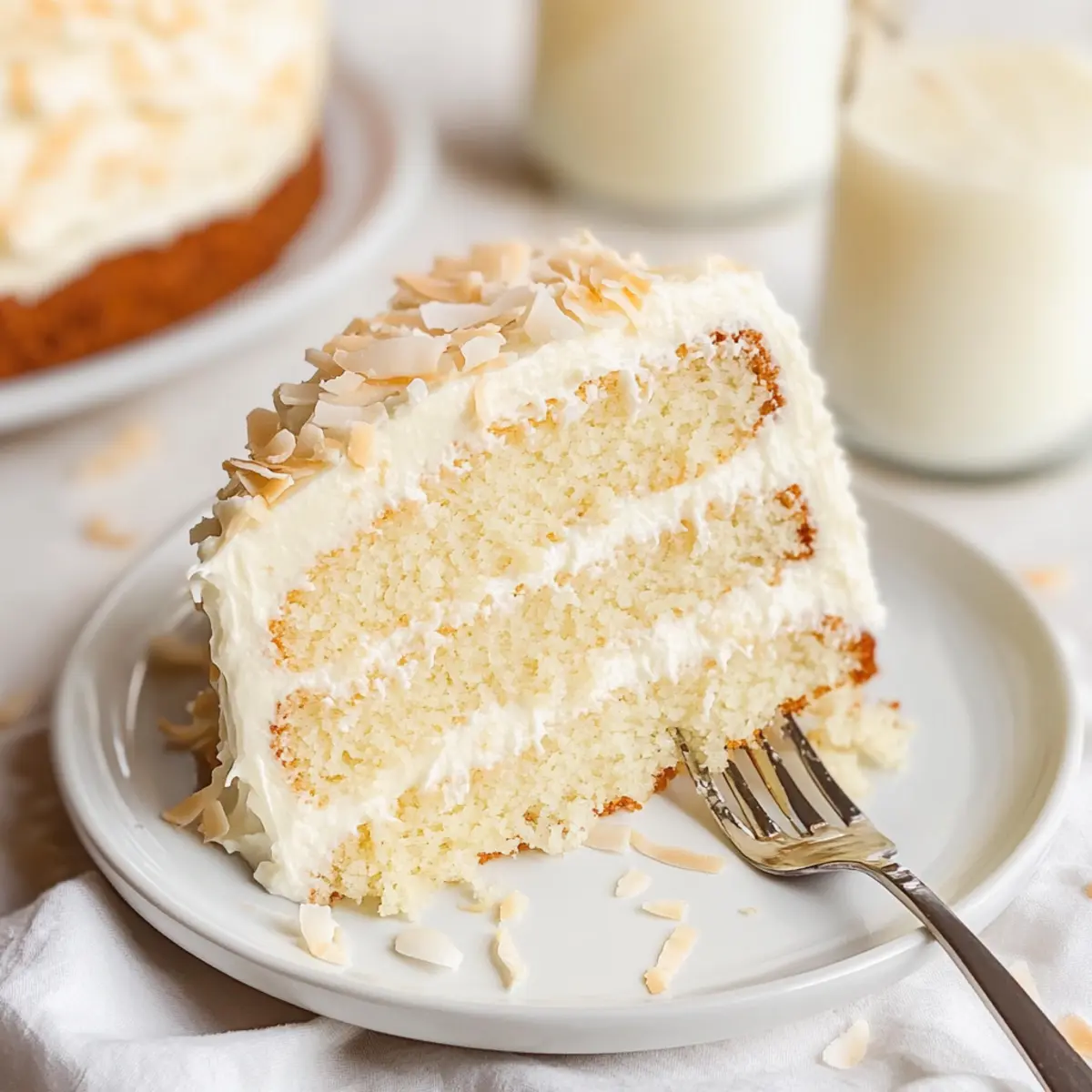
Coconut Cake Recipe FAQs
What type of coconut should I use for the best flavor?
For the best flavor, I recommend using unsweetened shredded coconut. This ensures that your Coconut Cake maintains the perfect balance of sweetness without overtaking the natural coconut flavor. If you can, try to use freshly shredded coconut for a richer taste, but if not, the unsweetened dried variety works beautifully as well!
How long can I store leftover Coconut Cake?
You can store your Coconut Cake in an airtight container in the refrigerator for up to 5 days. This keeps the cake layers moist and prevents the cream cheese frosting from becoming too soft. Whenever I have leftovers, I always enjoy indulging in a slice the next day, relishing how the flavors meld and intensify.
Can I freeze Coconut Cake, and how do I do it?
Absolutely! To freeze your Coconut Cake, first ensure it’s completely cooled. Then, wrap the cake layers tightly in plastic wrap and then in aluminum foil to prevent freezer burn. You can freeze it for up to 3 months. When you’re ready to enjoy it, transfer the wrapped cake to the refrigerator to thaw for 24 hours. This method helps keep the cake moist!
What can I do if my Coconut Cake turns out dense?
If your Coconut Cake turns out dense, it may be due to overmixing the batter or using cold ingredients. Be sure to mix just until combined after adding the dry ingredients. Also, always use room-temperature butter, eggs, and sour cream to ensure a fluffy texture. I often remind my cooking friends that a light hand creates the best cake!
Is there a way to make this recipe gluten-free?
Yes, you can easily make a gluten-free version of this Coconut Cake by substituting the all-purpose flour with a gluten-free flour blend. When doing this, ensure the blend contains xanthan gum for better texture. Additionally, always check your other ingredients to ensure they are gluten-free. It’s a delicious alternative that still offers all the richness and flavor!
Are there any common allergies I should consider?
When making this Coconut Cake, be mindful of potential allergies to dairy (from the cream cheese and butter) and eggs. For dairy-free options, you can replace the cream cheese with a vegan cream cheese alternative, and use applesauce or a flaxseed meal mix as an egg substitute. I love making these adjustments for my friends with dietary restrictions, and they always appreciate the thoughtful touch!
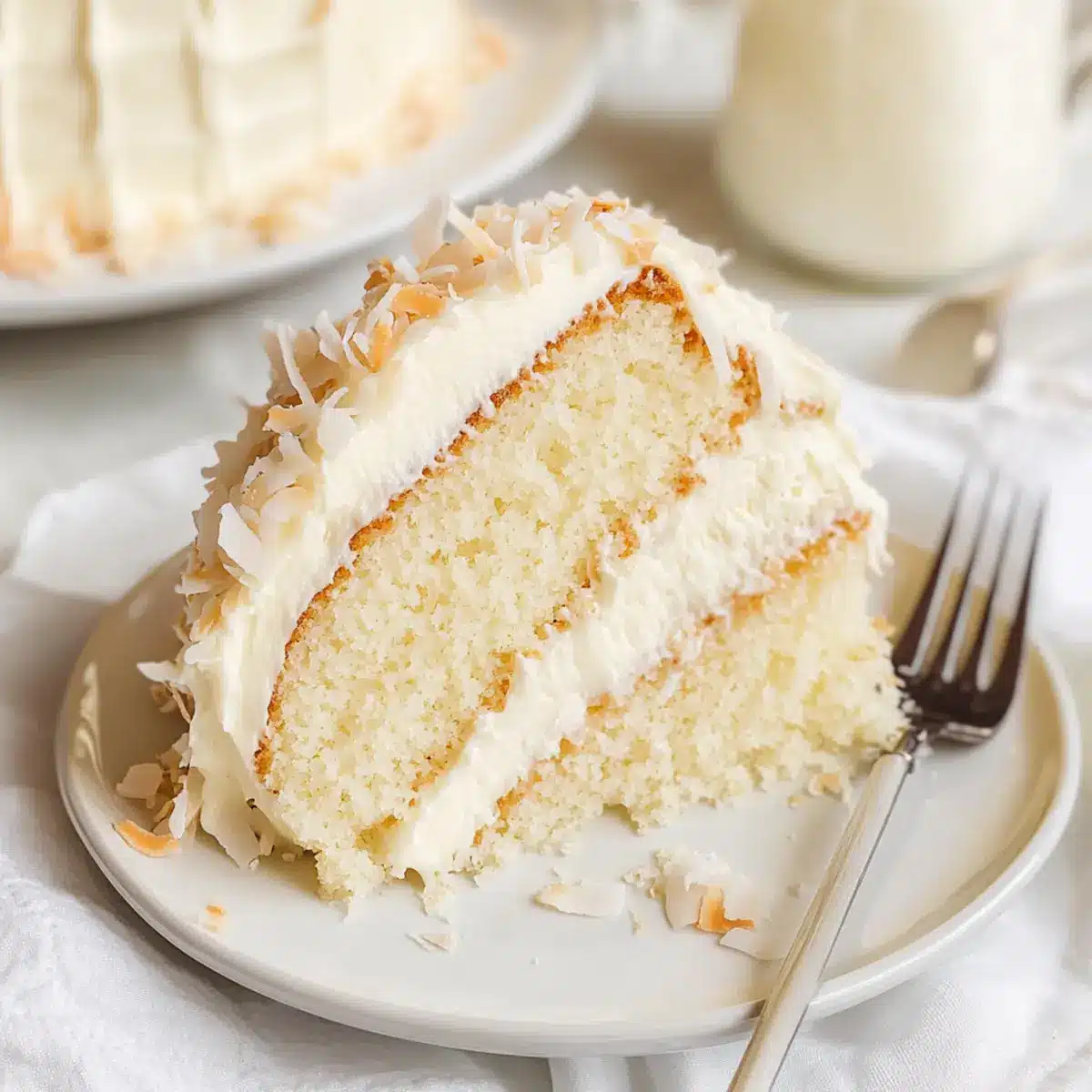
Irresistibly Moist Coconut Cake with Creamy Frosting
Ingredients
Equipment
Method
- Preheat your oven to 170ºC (340ºF) and line two 20 cm (8-inch) round baking pans with parchment paper.
- In a food processor, blend the unsweetened shredded coconut until finely ground. In a large bowl, sift together the processed coconut, all-purpose flour, baking powder, baking soda, and salt.
- Cream together the room-temperature butter and granulated sugar until light and fluffy, about 3-4 minutes.
- Add the eggs two at a time to the butter-sugar mixture, mixing well after each addition until smooth, about 2-3 minutes.
- Gradually add half of the dry ingredients, then the sour cream, coconut milk, vegetable oil, vanilla extract, and coconut extract. Mix until just combined before adding remaining dry ingredients.
- Divide the batter evenly between the prepared pans and bake for 20-23 minutes, or until a toothpick comes out clean.
- Remove cakes from the oven and cool in the pans for 10 minutes. Transfer layers onto a wire rack to cool completely.
- In a stand mixer, cream the softened butter until smooth, then gradually add cream cheese and powdered sugar until smooth.
- Assemble the cake by placing one layer on a serving plate, spreading cream cheese frosting on top, and adding the second layer. Frost the top and sides of the cake.
- Sprinkle toasted coconut flakes on the top and sides of the cake for decoration.
Leave a Reply