
As I stood in my kitchen, the aroma of sizzling garlic and sautéed vegetables wafted through the air, instantly lifting my spirits. Today, I’m excited to share my version of Japchae, a Korean stir-fried glass noodle dish that brings comfort and joy with every bite. This recipe features sweet potato glass noodles, tender beef, and vibrant veggies, making it a delightful option for busy weeknights or special gatherings. Not only is it quick to prepare, but it also offers a plethora of variations to fit any dietary need—be it gluten-free or vegetarian-friendly. Whether you’re tantalizing guests at a potluck or whipping up a nourishing meal for yourself, Japchae covers all bases. Are you ready to experience the magic of this beloved dish?
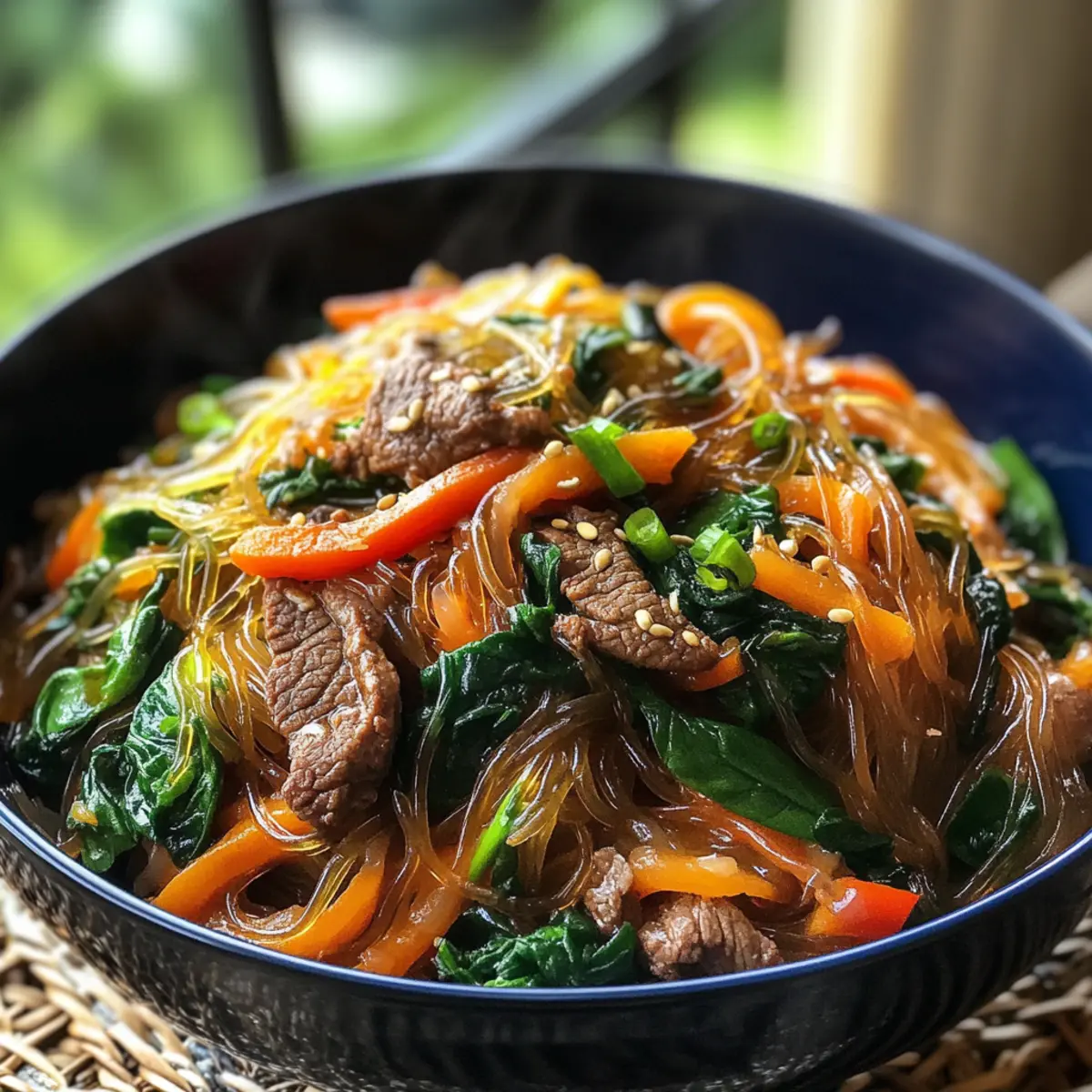
Why is Japchae so popular?
Flavor Explosion: The balance of sweet potato noodles and umami-rich soy sauce makes every bite a joyous experience.
Endless Customization: With options for protein and vegetables, you can easily adapt this dish to your taste or dietary restrictions.
Quick Cooking: Everything comes together in about 30 minutes—perfect for busy weeknights!
Crowd-Pleaser: Whether for a family dinner or a gathering, this dish never fails to impress.
Nutrient-Rich: Packed with vegetables, it offers a hearty yet light meal that’s under 250 calories per serving when portioned appropriately.
Try pairing it with a side of kimchi for an authentic touch that complements the flavors beautifully!
Japchae Ingredients
• Get ready to create this delightful dish!
For the Noodles
- Sweet Potato Glass Noodles – A chewy, slightly sweet base that sets Japchae apart from other noodle dishes.
For the Protein
- Beef – Thinly sliced for quick cooking; feel free to substitute with chicken or tofu for different flavors.
For the Vegetables
- Carrots – Brightens the dish with color and sweetness; cut into thin strips for faster cooking.
- Onion – Enhances the flavor; use white or yellow onion cut into strips.
- Green Onions – Offers a fresh, mild onion flavor; both white and green parts are used for depth.
- Spinach – Adds nutrients and gorgeous color; can easily be substituted with other greens.
For Flavoring
- Garlic – Provides aromatic flavor; crushed or minced for the best impact.
- Soy Sauce – This essential ingredient brings umami to the sauce; swap for coconut aminos for a gluten-free option.
- Brown Sugar – Balance out the savory with a touch of sweetness; date paste works as a substitute, or you can skip it altogether.
For Cooking
- Sesame Oil – Imparts that nutty flavor that’s essential for authentic taste.
- Olive Oil – Used for sautéing the beef and veggies, ensuring nothing sticks to the pan.
Step‑by‑Step Instructions for Japchae
Step 1: Prep Ingredients
Begin by gathering and preparing all your ingredients. Thinly slice the beef and any chosen protein substitutes, then set them aside. Next, cut the carrots and onions into thin strips for quick cooking. Chop the green onions and prepare the spinach by rinsing it thoroughly. This step sets you up for success in creating your delicious Japchae.
Step 2: Cook Noodles
In a large pot, bring water to a boil and add a splash of olive oil to prevent sticking. When the water is bubbling, add the sweet potato glass noodles and boil them for about 5-6 minutes, or until they are tender yet slightly chewy. Once cooked, drain the noodles and rinse them under cold water to stop the cooking process, then set them aside to cool.
Step 3: Cook Beef
Preheat a large skillet or wok over high heat. Add a drizzle of olive oil, then toss in the thinly sliced beef. Stir-fry for about 2-3 minutes, or until the beef is browned. During cooking, pour in half of the soy sauce, sesame oil, and brown sugar, allowing the flavors to absorb into the meat. Remove the beef from the skillet and set aside.
Step 4: Sauté Vegetables
In the same skillet, add a bit more olive oil if necessary, and introduce the sliced carrots and onions. Sauté them for about 3-4 minutes until they become softened and fragrant. Then stir in the remaining soy sauce, sesame oil, brown sugar, minced garlic, and green onions. Sauté for another minute, ensuring everything is well incorporated and aromatic.
Step 5: Combine
Once the vegetables are tender, add the rinsed spinach to the skillet. Turn off the heat and let the residual warmth wilt the spinach. In a large mixing bowl, combine the cooked sweet potato noodles, sautéed beef, and vegetables. Toss everything thoroughly to ensure each strand of noodle is coated in the savory sauce, creating a vibrant, mouth-watering Japchae.
Step 6: Serve
Dish out the finished Japchae while it’s warm, allowing the delightful aromas to entice everyone. This dish not only can be enjoyed straight away but also makes for delicious leftovers when stored in the fridge. The flavors blend beautifully over time, making it an excellent option for meal prep as well!
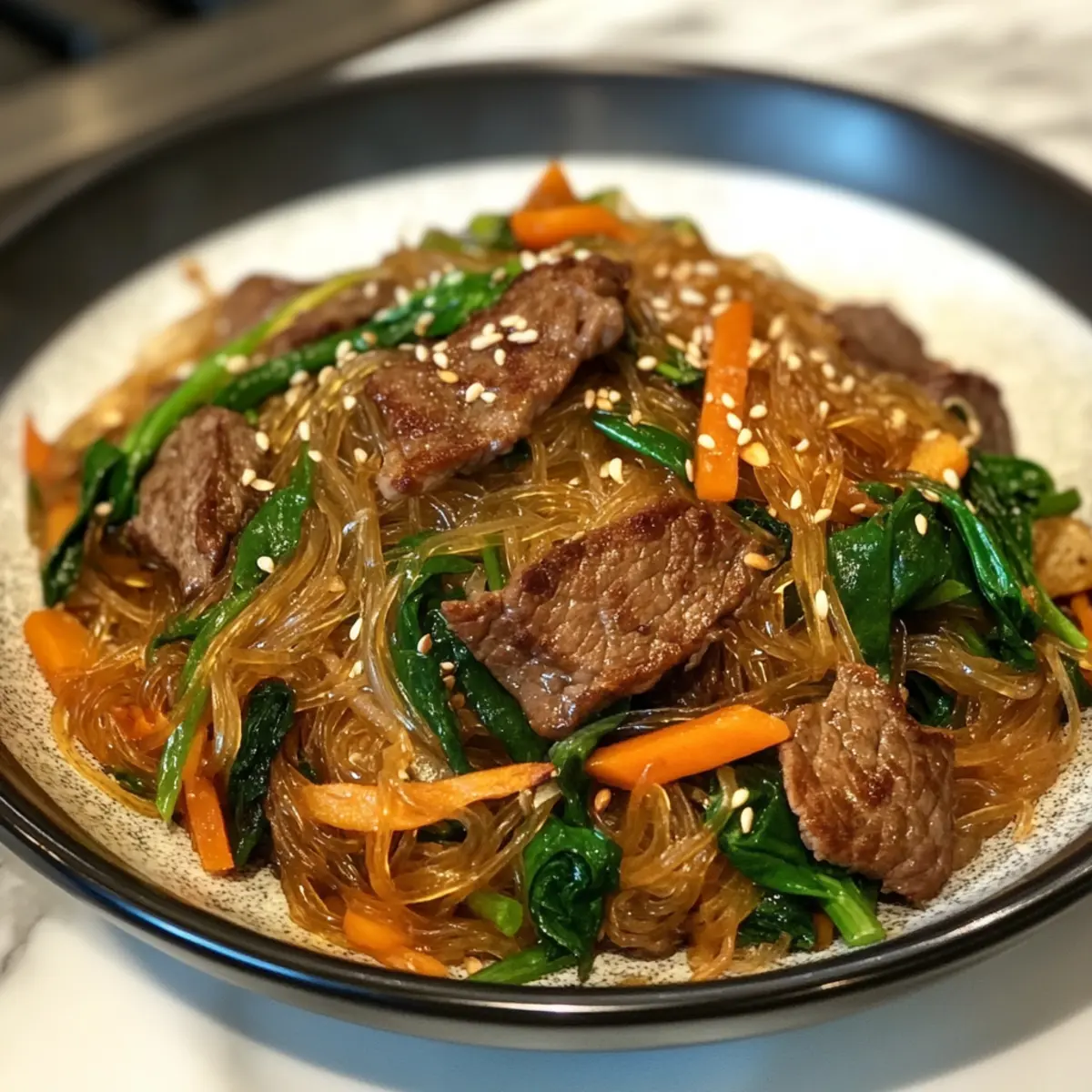
Japchae: Customize Your Dish!
Feel free to get creative with your Japchae and tailor it to suit your taste buds or dietary needs!
- Dairy-Free: Replace any seasoning that might have dairy with vegan-friendly alternatives like coconut aminos. This keeps the dish light and fresh.
- Gluten-Free: Swap soy sauce for coconut aminos to make this dish gluten-free without losing flavor. It’s a great option for all dietary preferences!
- Hearty Vegetarian: Use tofu or tempeh instead of beef for a protein-packed vegetarian version that still tastes decadent. It’s satisfying and delicious!
- Extra Veggies: Add bell peppers, zucchini, or snap peas to amp up nutrition and color. The more, the merrier when it comes to veggies!
- Spicy Kick: Throw in some sliced chili peppers or a sprinkle of red pepper flakes for a delightful heat that will tingle your palate.
- Texture Twist: Try adding crispy fried tofu, roasted nuts, or even a sprinkle of sesame seeds for a crunch that contrasts beautifully with the noodles.
- Smoky Flavor: For a unique twist, consider using smoked soy sauce or adding liquid smoke to your cooking process. This enhances the overall depth of flavors.
- Sweet Alternatives: If looking to reduce sugar, experiment with natural sweeteners like maple syrup or a touch of agave to keep that sweet undertone intact.
Remember, the possibilities are endless! If you’re intrigued by the hearty vegetarian options, you might enjoy exploring other variations, such as a veggie-packed stir-fry to accompany your Japchae!
Make Ahead Options
These Japchae are perfect for busy weeknights and meal prep enthusiasts! You can prepare the vegetables (carrots, onions, and spinach) and protein (beef, chicken, or tofu) up to 24 hours in advance, simply chopping and storing them in airtight containers in the refrigerator to keep them fresh and crisp. The sweet potato noodles are best cooked right before serving to ensure optimal texture; however, you can have them boiled and ready to go up to 3 days ahead if you refrigerate them properly instead of freezing. When you’re ready to enjoy, just sauté the prepped ingredients and combine them with the cooked noodles—this way, you’ll savor delightful flavors without the stress, while keeping dinner just as delicious as if it were freshly made!
Storage Tips for Japchae
Fridge: Store leftover Japchae in an airtight container for up to 3 days. This keeps the flavors intact and allows you to enjoy it later.
Freezer: While not recommended, if necessary, you can freeze Japchae for up to 1 month. Just note that vegetables may lose their texture upon thawing.
Reheating: Gently reheat in a skillet over medium heat, adding a splash of water or oil as needed to revive moisture and prevent sticking.
Avoid Long-Term Storage: For the best taste and texture, enjoy Japchae fresh, as reheating may alter the quality of the sweet potato noodles and veggies.
Expert Tips for Perfect Japchae
-
Fresh Ingredients: Using fresh, crunchy vegetables is key to achieving the best texture and flavor in your Japchae.
-
Timing Matters: Keep an eye on your vegetable cooking time to avoid sogginess; they should be tender but still vibrant and crisp.
-
Noodle Preparation: Cook sweet potato noodles fresh for optimal texture. Prepare other ingredients beforehand for a seamless cooking experience.
-
Avoid Overcooking: Be mindful not to overcook the beef; it should remain tender and juicy, not tough.
-
Customize Wisely: Feel free to experiment with your protein choice! Chicken, shrimp, or tofu all work beautifully with this Japchae recipe.
What to Serve with Sweet Potato Glass Noodles Stir-Fried Japchae?
Elevate your Japchae experience with these delightful pairings that complement its hearty flavors and textures perfectly.
-
Kimchi: This fermented side dish brings a spicy, tangy kick that cuts through the sweetness of the noodles, enhancing your meal’s complexity. It’s a traditional favorite that makes every bite pop!
-
Fresh Cucumber Salad: Crisp cucumbers tossed in a light vinegar dressing offer a refreshing crunch that contrasts beautifully with the chewy noodles, making it a perfect palate cleanser.
-
Steamed Bok Choy: The mild, tender greens provide a nutritious touch, with just a hint of sweetness. Their lush texture pairs harmoniously with Japchae’s savory goodness.
-
Korean Fried Chicken: Crispy, tangy, and slightly sweet, this iconic dish makes a robust companion to the lighter noodles. It adds a fun celebration feel to your dining table!
-
Sweet Potato Steamed Buns: These fluffy buns filled with sweet potatoes provide a delightful contrast to the sautéed veggies and meaty flavors in Japchae, creating a well-rounded meal.
-
Miso Soup: Warm and comforting, this broth-based soup brings umami depth that beautifully resonates with the flavors in your Japchae dish, finishing the meal with cozy simplicity.
-
Green Tea: Light and fragrant, a glass of green tea complements the savory notes of the dish while refreshing the palate without overwhelming the flavors.
Let each pairing enhance the vibrant experiences of your Japchae, making your dining occasion truly special!
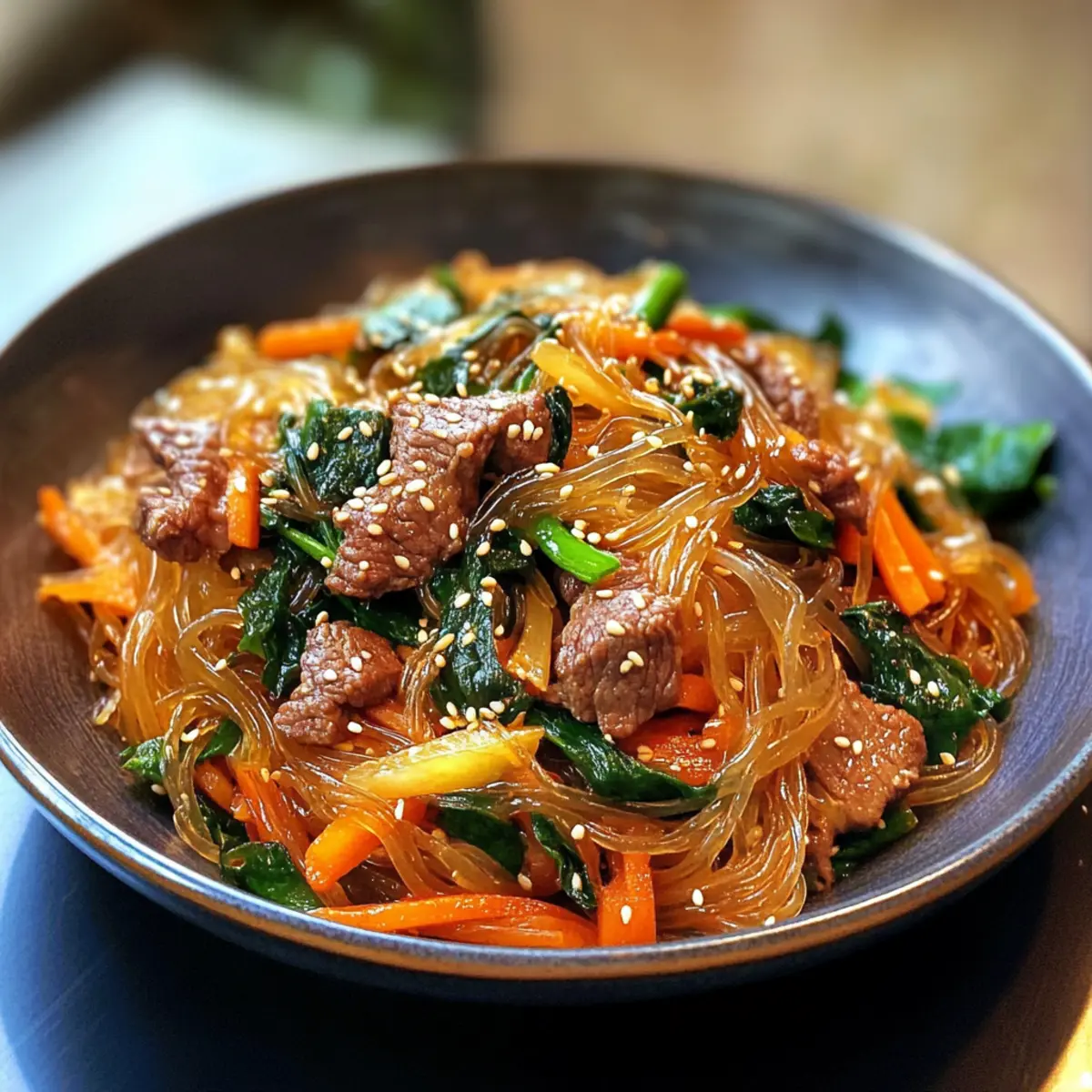
Japchae Recipe FAQs
What type of sweet potato noodles are best for Japchae?
Absolutely! The best noodles for Japchae are sweet potato glass noodles, also known as dangmyeon. They are slightly sweet and chewy, creating a unique texture that sets this dish apart. You can find them in Asian grocery stores or online; just make sure they are labeled as sweet potato noodles.
How long can I store leftovers in the fridge?
Very! You can keep your leftover Japchae in an airtight container in the fridge for up to 3 days. Just ensure it’s properly sealed to maintain its flavor. To enjoy your leftovers, simply reheat gently in a skillet with a splash of water or oil to revive the noodles’ texture.
Can I freeze Japchae?
While it’s best enjoyed fresh, you can freeze Japchae for up to 1 month if needed. To do so, place the cooled dish in a freezer-safe container. When ready to eat, thaw in the refrigerator overnight before reheating. Keep in mind that the vegetables may become mushy after thawing, so for best results, it’s advisable to make small batches.
What’s the secret to keeping the vegetables crunchy?
The key to maintaining crunchy vegetables is to sauté them just until they’re tender yet still vibrant. Aim for about 3-4 minutes of cooking after adding them to the skillet. Always check for visual cues; you want the veggies bright and colorful, not overcooked or soggy!
Are there any dietary considerations for this recipe?
Absolutely! If you’re concerned about allergies, this recipe can easily be made gluten-free by substituting soy sauce with coconut aminos. Also, if you have a vegetarian diet, you can replace beef with tofu or mushrooms, ensuring everyone at your table can enjoy this delightful Japchae!
How do I know when my noodles are perfectly cooked?
For perfect sweet potato noodles, follow the package instructions but keep a close eye! Typically, they should be boiled for 5-6 minutes. You want them to be tender yet retain a slight chewiness. After draining, rinse them under cold water to stop the cooking process, ensuring they won’t turn mushy when combined with the other ingredients.
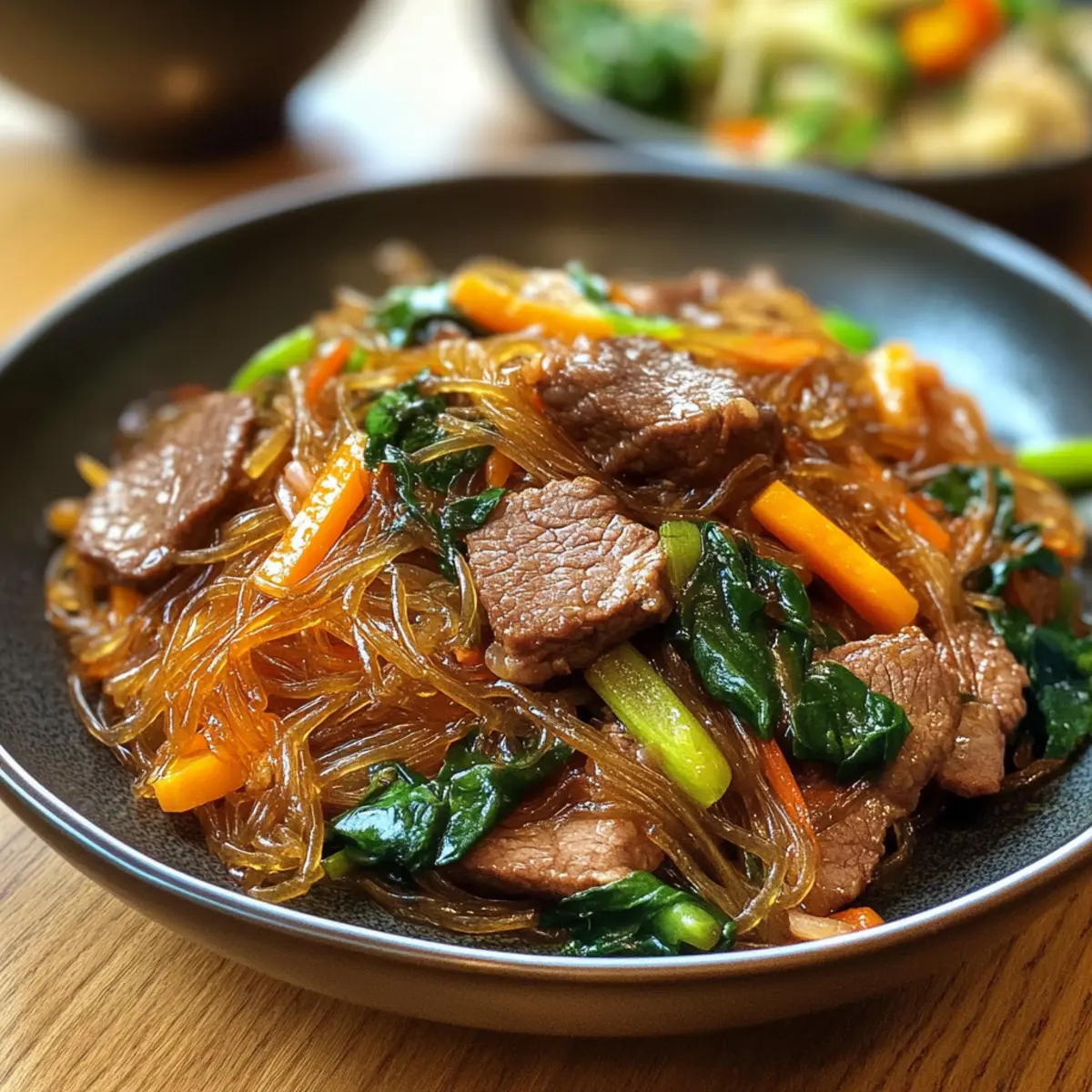
Quick & Easy Japchae: A Tasty Twist on Korean Comfort Food
Ingredients
Equipment
Method
- Prep Ingredients: Gather and prepare all your ingredients. Thinly slice beef and any substitutes, cut carrots and onions into strips, chop green onions, and rinse spinach.
- Cook Noodles: Boil water in a large pot with olive oil, add the noodles, and cook for 5-6 minutes until tender yet chewy. Drain and rinse under cold water.
- Cook Beef: In a preheated skillet over high heat, sauté sliced beef in olive oil for 2-3 minutes. Add half of the soy sauce, sesame oil, and brown sugar. Remove beef and set aside.
- Sauté Vegetables: In the same skillet, cook carrots and onions in olive oil for 3-4 minutes. Stir in remaining soy sauce, sesame oil, brown sugar, garlic, and green onions. Sauté another minute.
- Combine: Add spinach to the skillet, turning off the heat. In a mixing bowl, combine noodles, sautéed beef, and vegetables. Toss well to coat everything in the sauce.
- Serve: Dish out warm Japchae and enjoy immediately or as leftovers.
Leave a Reply