
The aroma of sizzling ingredients fills my kitchen as I stir-fry my way through a vibrant, colorful medley. Today, I’m working on a classic Korean Japchae, a beloved dish that never fails to impress. These chewy sweet potato noodles, known as dangmyeon, beautifully absorb the rich flavors of sesame oil and soy sauce while mingling with tender beef and fresh vegetables. What I adore about this dish is its remarkable versatility; it caters to various dietary preferences with easy swaps, whether you choose chicken, tofu, or just vegetables. Plus, it’s a quick and delightful option that can turn any weeknight dinner into a feast fit for special occasions. Are you ready to fall in love with the savory goodness of this traditional treat?
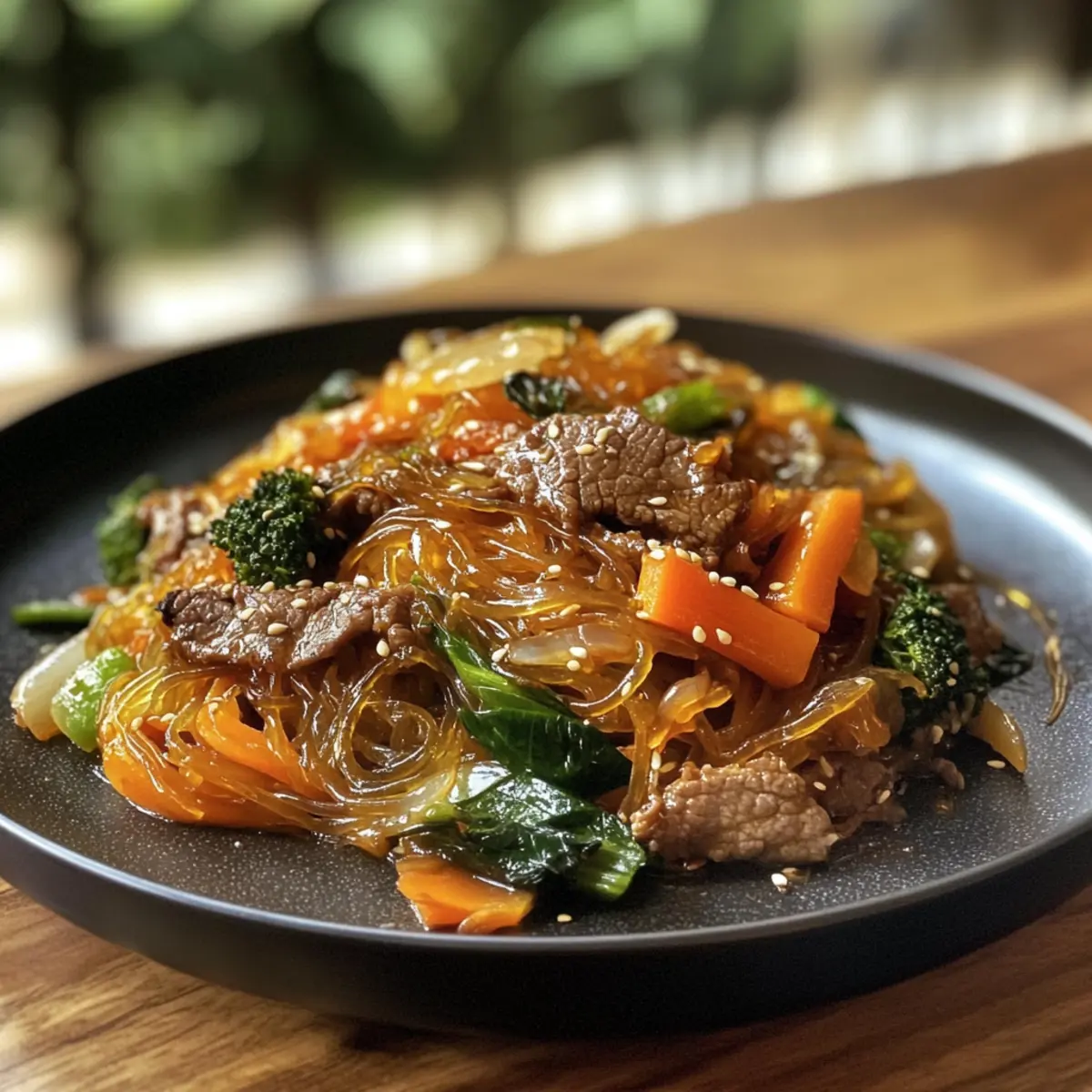
Why Is Korean Japchae So Special?
Versatile and Customizable: Korean Japchae allows you to tailor it to your taste! Whether you prefer chicken, tofu, or a rainbow of seasonal vegetables, you can make it your own. Flavorful Symphony: The harmonious blend of sweet and savory notes from soy sauce and sesame oil ensures every bite is a taste sensation. Nutritional Boost: Packed with a variety of veggies, this dish not only satisfies but also nourishes, making it a healthy choice for dinner. Quick Preparation: Perfect for busy evenings, Japchae comes together in under 30 minutes, allowing you to serve up a mouthwatering meal in no time. Want to explore more delightful options? Check out our Asian-inspired dishes for more culinary inspiration!
Korean Japchae Ingredients
For the Noodles
• Sweet Potato Glass Noodles (Dangmyeon) – The star of the dish, these noodles provide a unique texture and absorb flavors beautifully. Substitution: Feel free to use rice noodles if you prefer.
For the Protein
• Beef (thinly sliced) – Adds a savory depth to the dish, perfectly balancing the sweet and nutty notes. Substitution: Swap with chicken or tofu for a lighter version.
For the Vegetables
• Carrots (julienned) – Offers a sweet crunch that brightens up the dish.
• Bell Peppers (sliced) – Adds color and a touch of sweetness, complementing the savory ingredients.
• Spinach (fresh) – Infuses the dish with vibrant greens and essential nutrients.
For Flavoring
• Soy Sauce – Enhances umami flavor with a delightful saltiness. Substitution: Use low-sodium soy sauce for a healthier option.
• Sesame Oil – A little goes a long way in adding a rich, nutty flavor. Notes: Adjust to taste for your final flavor balance.
For Garnish
• Green Onions (chopped) – Adds a fresh finish and crunch to your Japchae. Notes: Can be substituted with chives if unavailable.
Now that you’re familiar with the essential components, get ready to embark on the delightful journey of preparing Korean Japchae, where every bite tells a story of flavor!
Step‑by‑Step Instructions for Korean Japchae
Step 1: Prep Ingredients
Begin by soaking the sweet potato glass noodles (dangmyeon) in warm water for about 30 minutes, allowing them to soften and become pliable. While the noodles soak, thinly slice the beef and prepare your vegetables, cutting the carrots and bell peppers into strips and rinsing the spinach. Having everything ready will make the cooking process smooth and enjoyable.
Step 2: Cook Noodles
Once the noodles have softened, drain and rinse them under cold water. Bring a large pot of water to a boil, and add the soaked noodles, cooking them for 5-7 minutes until they achieve a chewy texture. Make sure to stir occasionally. Once done, drain the noodles, rinse again, and set them aside to cool while you stir-fry the beef and vegetables for your Korean Japchae.
Step 3: Stir-Fry Beef
In a large wok or skillet, heat a tablespoon of oil over medium-high heat. Once shimmering, add the thinly sliced beef and stir-fry for about 2-3 minutes until it turns a deep brown and is cooked through. Be sure to separate the pieces as they cook to achieve even browning. Once browned, remove the beef from the pan and set it aside on a plate.
Step 4: Cook Vegetables
In the same pan, add a bit more oil if needed and toss in the prepared vegetables. Stir-fry them for about 3-4 minutes until they start to soften and are vibrant in color, keeping them crisp. Ensure to continuously move them around the pan. The aroma of the vegetables will fill your kitchen, signaling that it’s time to combine everything for your delicious Korean Japchae.
Step 5: Combine
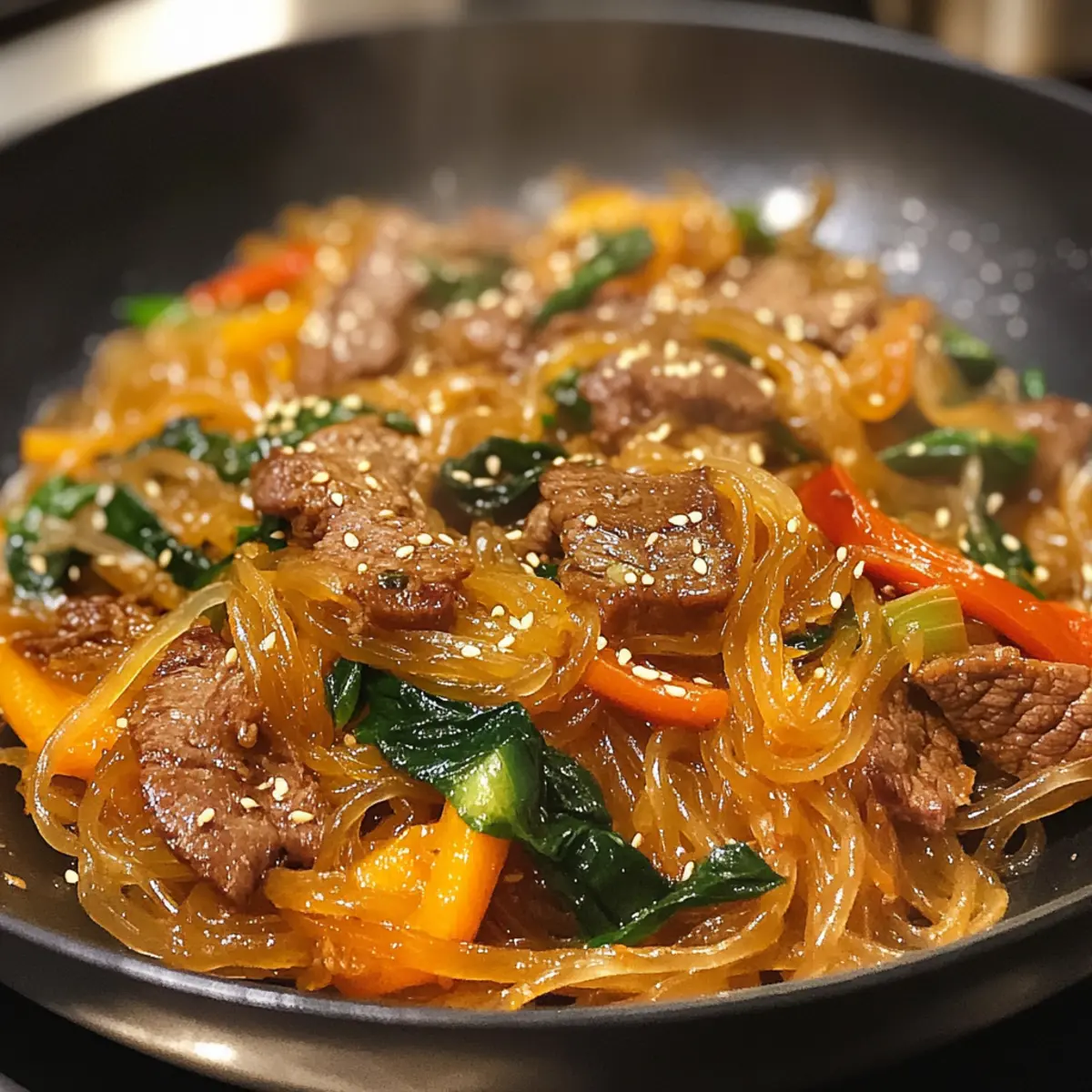
Return the cooked noodles and beef back to the pan with the vegetables. Drizzle in the soy sauce and sesame oil, tossing everything together for 2-3 minutes over medium heat. Make sure each ingredient is coated evenly in the sauce, promoting a beautiful glossy finish. The flavors will meld together beautifully in this step, creating that signature taste of Korean Japchae.
Step 6: Serve
Once everything is well combined and heated through, transfer your delicious Japanese Japchae onto a serving platter. Garnish with chopped green onions for a fresh touch and a pop of color. You can serve this delightful stir-fried noodle dish hot or let it cool to room temperature for a refreshing meal option. Enjoy the wonderful blend of textures and flavors!
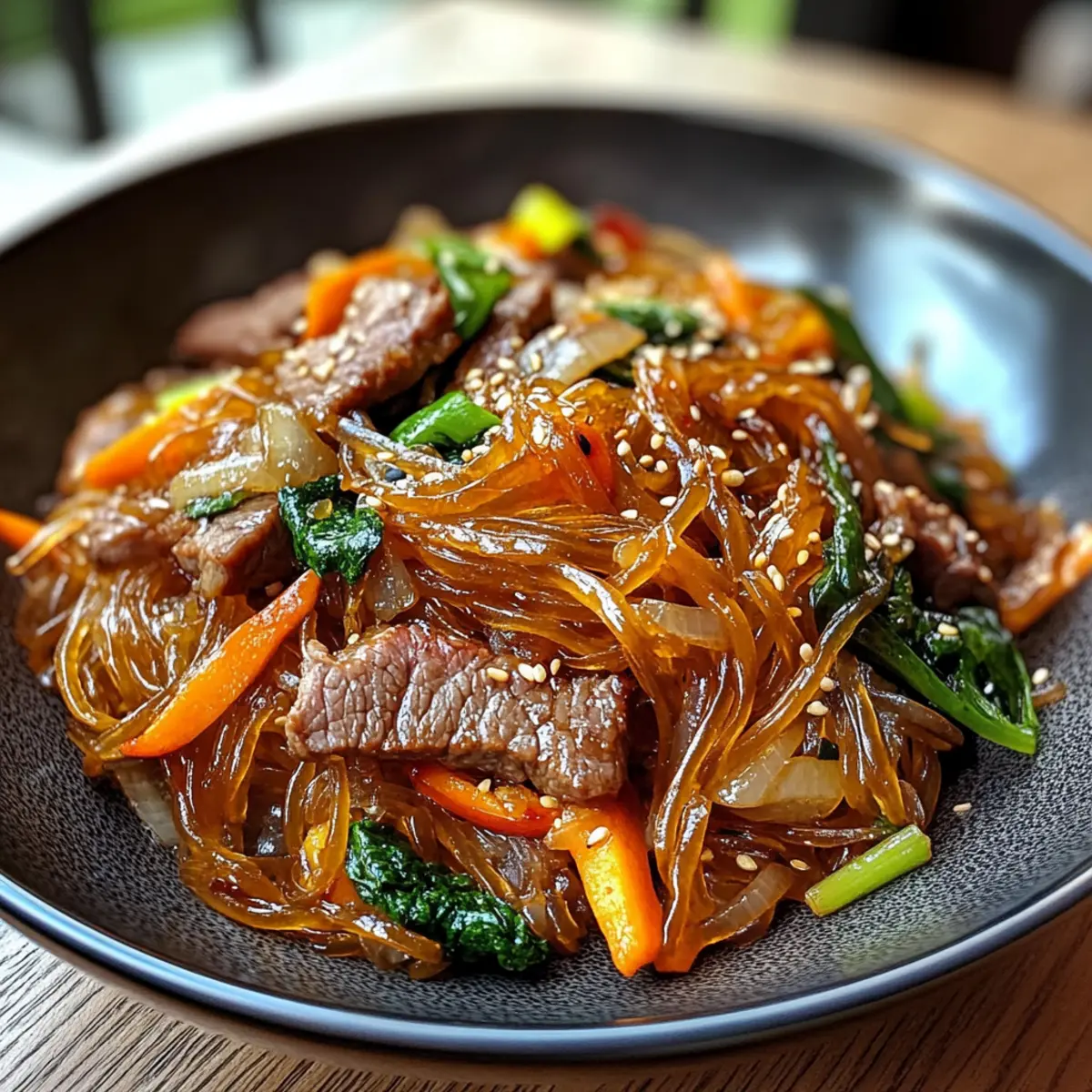
How to Store and Freeze Korean Japchae
Fridge: Store leftover Korean Japchae in an airtight container in the refrigerator for up to 3 days. This helps maintain its flavors and prevents it from drying out.
Freezer: For longer storage, freeze Japchae in a freezer-safe container for up to 2 months. Make sure to pack it tightly to avoid freezer burn.
Reheating: When ready to enjoy, thaw in the fridge overnight, then gently reheat in a skillet over low heat, adding a splash of water or soy sauce to revive the moisture and flavors.
Portioning: Consider portioning out servings before freezing to make reheating quicker and easier during busy weeknights!
What to Serve with Authentic Japchae?
Transform your Japchae into a full meal with these delightful pairings that enhance its flavors and textures.
-
Crispy Spring Rolls: These crunchy delights offer a contrast to the chewy noodles, making each bite a flavorful adventure. Perfect for sharing, they bring a delightful texture that will wow your guests.
-
Steamed Rice: A simple side that allows the flavors of the Japchae to shine. The fluffy grains pair beautifully with the savory notes of the stir-fry, making it a comforting addition to your meal.
-
Korean Kimchi: This tangy, fermented side adds a spicy kick and depth, balancing the sweeter flavors of Japchae while introducing a probiotic boost to your dinner.
-
Sweet Potato Fries: Crispy and slightly sweet, these fries echo the flavor profile of the noodles. They create a fun, playful twist on traditional accompaniments while satisfying your hunger.
-
Sesame Broccoli: Lightly steamed and tossed in sesame oil, this veggie side mirrors the earthy tones of the main dish and brings a delightful crunch to your plate.
-
Miso Soup: An umami-rich broth that warms the soul, this soup prepares your palate for the flavors of Japchae while adding nutritional value to your meal.
-
Green Tea: A light beverage that cleanses the palate between bites, its subtle earthy notes make it a perfect companion to the savory flavors of your Korean Japchae.
-
Fruit Sorbet: For dessert, a refreshing sorbet balances the savory meal perfectly. It cleanses the palate and offers a sweet, cool finish after the warm, flavorful Japchae.
Tips for the Best Korean Japchae
• Noodle Texture: Ensure your sweet potato glass noodles are cooked only until chewy. Overcooking can lead to a mushy texture, ruining the dish.
• High Heat Stir-Fry: Use a high heat for stir-frying your meat and vegetables to achieve a delightful char and maintain their crunch.
• Prepping Ingredients: Prepare and chop all your ingredients before starting to cook. This creates a seamless cooking experience, ensuring everything is fresh and ready to go.
• Balanced Sauce: Adjust the amount of soy sauce and sesame oil to your taste. A little can make a significant difference for your Korean Japchae, so add gradually and taste as you go.
• Seasonal Veggies: Feel free to mix up the veggies according to what’s in season or what you have on hand. This not only enhances flavor but keeps your Japchae vibrant and nutritious.
• Make-Ahead Option: Remember, you can prepare Japchae ahead of time! Store it in an airtight container and gently reheat for a quick delicious meal any day of the week.
Korean Japchae: Customize Your Dish!
Feel free to put your own spin on this delightful dish and discover new flavor paths that will tantalize your taste buds.
-
Dairy-Free: Replace traditional soy sauce with a gluten-free tamari to enjoy a guilt-free version.
-
Vegetarian: Swap meat for firm tofu or tempeh, marinating them in soy sauce for extra flavor. This provides a great protein alternative, ensuring that everyone at the table can enjoy.
-
Spicy Twist: Add a tablespoon of gochujang for a fiery kick! The heat balances beautifully with the sweetness of the dish, creating a flavorful explosion.
-
Nutty Crunch: Toss in a handful of roasted sesame seeds or chopped peanuts for texture and added crunch, elevating your Japchae to a whole new level.
-
Heat Levels: If preferred, replace soy sauce with a spicy soy sauce or sriracha, which adds both heat and flavor depth, making each forkful an adventure.
-
Vegetable Variety: Incorporate seasonal veggies like zucchini, snow peas, or mushrooms to enhance freshness and flavor. The variety keeps your Japchae vibrant and exciting.
-
Rice Noodle Version: If you can’t find sweet potato noodles, feel free to use rice noodles instead. They soak up the flavors wonderfully, making this a truly versatile dish.
-
Bulk It Up: For a heartier meal, add cooked rice or quinoa to the mix. It makes the dish even more satisfying, perfect for those famished nights.
For those who adore experimenting with flavors, consider this delightful option as a jumping-off point. You might also enjoy crafting your own variations inspired by our Asian-inspired dishes. Happy cooking!
Make Ahead Options
Korean Japchae is perfect for meal prep enthusiasts looking to save time during busy weeknights! You can prepare the sweet potato noodles and slice the beef and vegetables up to 24 hours in advance, keeping everything in separate airtight containers in the refrigerator to maintain freshness. Additionally, you can cook the noodles and set them aside for up to 3 days—just remember to toss them with a little oil to prevent sticking. When you’re ready to enjoy this delightful stir-fried dish, simply stir-fry the beef, add the vegetables, toss in the pre-cooked noodles, and stir in the sauce for a quick assembly that delivers restaurant-quality results with minimal effort.
Korean Japchae Recipe FAQs
What type of sweet potato noodles should I use for Japchae?
For the best results, I recommend using sweet potato glass noodles, known as dangmyeon. These noodles provide a unique chewy texture and absorb flavors well. If you can’t find them, feel free to substitute with rice noodles; just be mindful that the texture will be different.
How should I store leftover Japchae?
Absolutely! You can store your leftover Korean Japchae in an airtight container in the refrigerator for up to 3 days. This keeps the flavors intact and prevents the noodles from drying out. Just remember to reheat gently to avoid overcooking the noodles!
Can I freeze Korean Japchae?
Very definitely! To freeze your Japchae, place it in a freezer-safe container, making sure to pack it tightly to avoid freezer burn. It can stay good for up to 2 months. When you’re ready to enjoy it, thaw it in the refrigerator overnight, then gently reheat in a skillet with a splash of water or soy sauce to restore moisture.
What should I do if my noodles are sticky?
If your noodles are sticking together, it could be due to overcooking or insufficient rinsing after boiling. To fix this, rinse the noodles thoroughly under cold water right after boiling to stop the cooking process. You can also toss them with a little sesame oil after rinsing to help separate them before adding them to your stir-fry.
Is there a way to make this dish suitable for gluten-free diets?
Absolutely! You can easily make Korean Japchae gluten-free by using gluten-free soy sauce, often labeled as tamari. Just check the labels on your ingredients, as some versions of sweet potato noodles may also contain gluten. As always, happy cooking!
Can my pets enjoy any of the ingredients used in Japchae?
While many ingredients are safe for pets, some can be harmful. For example, onions and garlic (found in the green onions and soy sauce) are toxic to dogs and cats. If you wish to share something with your furry friends, consider giving them plain, cooked vegetables like carrots, but be sure to keep the seasoned dish away from them. Always prioritize safety and consult your veterinarian for more specific advice!
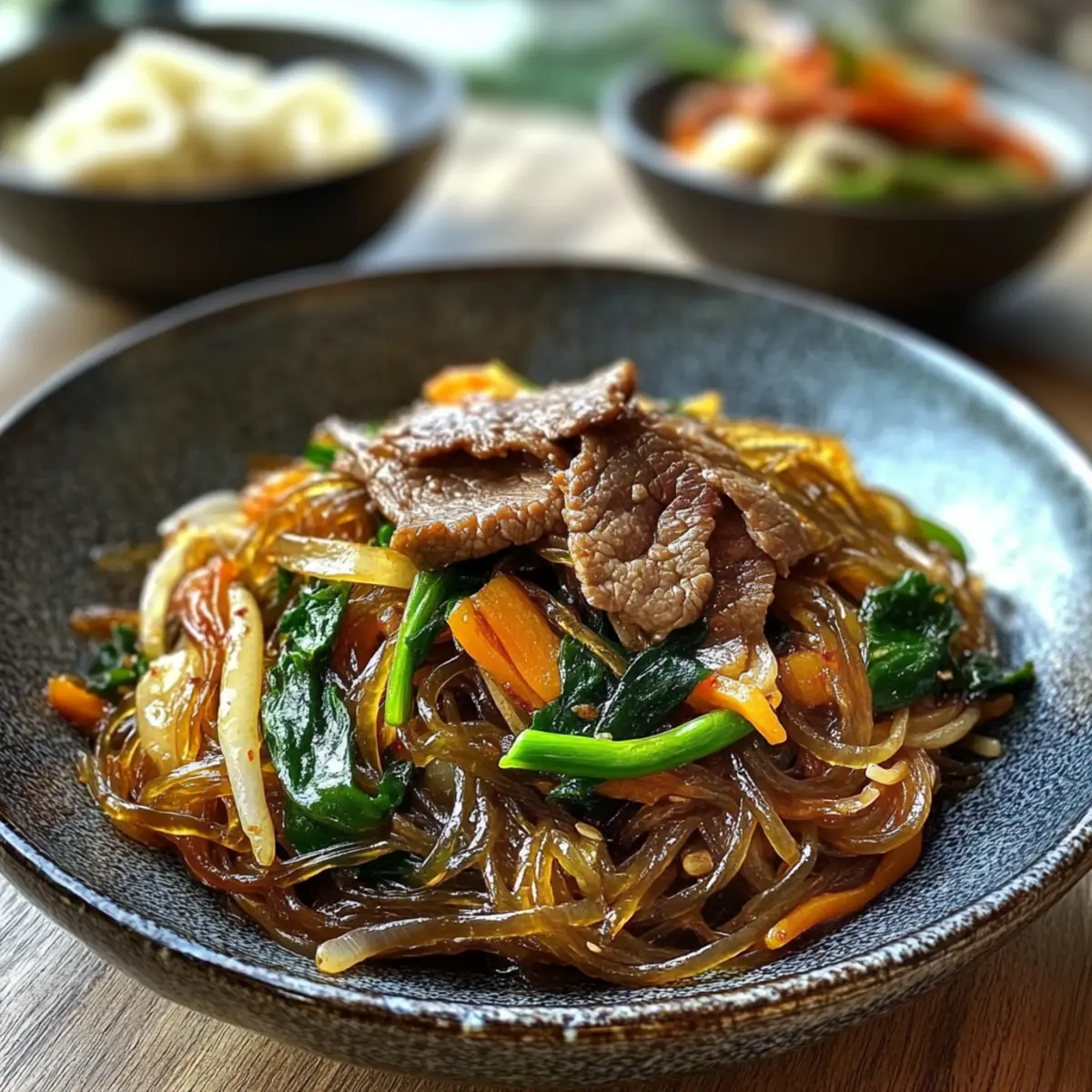
Korean Japchae: Delightful Stir-Fried Noodles You'll Love
Ingredients
Equipment
Method
- Begin by soaking the sweet potato glass noodles (dangmyeon) in warm water for about 30 minutes.
- Once the noodles have softened, drain and rinse them under cold water. Bring a large pot of water to a boil and add the soaked noodles, cooking them for 5-7 minutes.
- In a large wok or skillet, heat a tablespoon of oil over medium-high heat. Add the thinly sliced beef and stir-fry for about 2-3 minutes until cooked through.
- In the same pan, add a bit more oil if needed and toss in the prepared vegetables. Stir-fry for about 3-4 minutes until they start to soften.
- Return the cooked noodles and beef back to the pan with the vegetables. Drizzle in the soy sauce and sesame oil, tossing everything together for 2-3 minutes over medium heat.
- Transfer your Korean Japchae onto a serving platter and garnish with chopped green onions.
Leave a Reply