
As the chill of autumn settles in, there’s nothing quite like the warmth of a steaming bowl of Budae Jjigae. This one-pot Korean Army stew effortlessly blends savory flavors, showcasing an array of ingredients from spicy kimchi to succulent sausages and tender noodles. What I love most about this dish is how customizable it is; you can easily adapt it to suit your pantry’s offerings or personal tastes. Whether you’re looking for a hearty meal to satisfy the whole family or a cozy dinner just for yourself, this comforting stew makes preparation a breeze. Ready to dive into a culinary adventure that honors resilience and creativity? Let’s unravel the irresistible magic of Budae Jjigae and explore how it can bring a delightful twist to your dinner table!
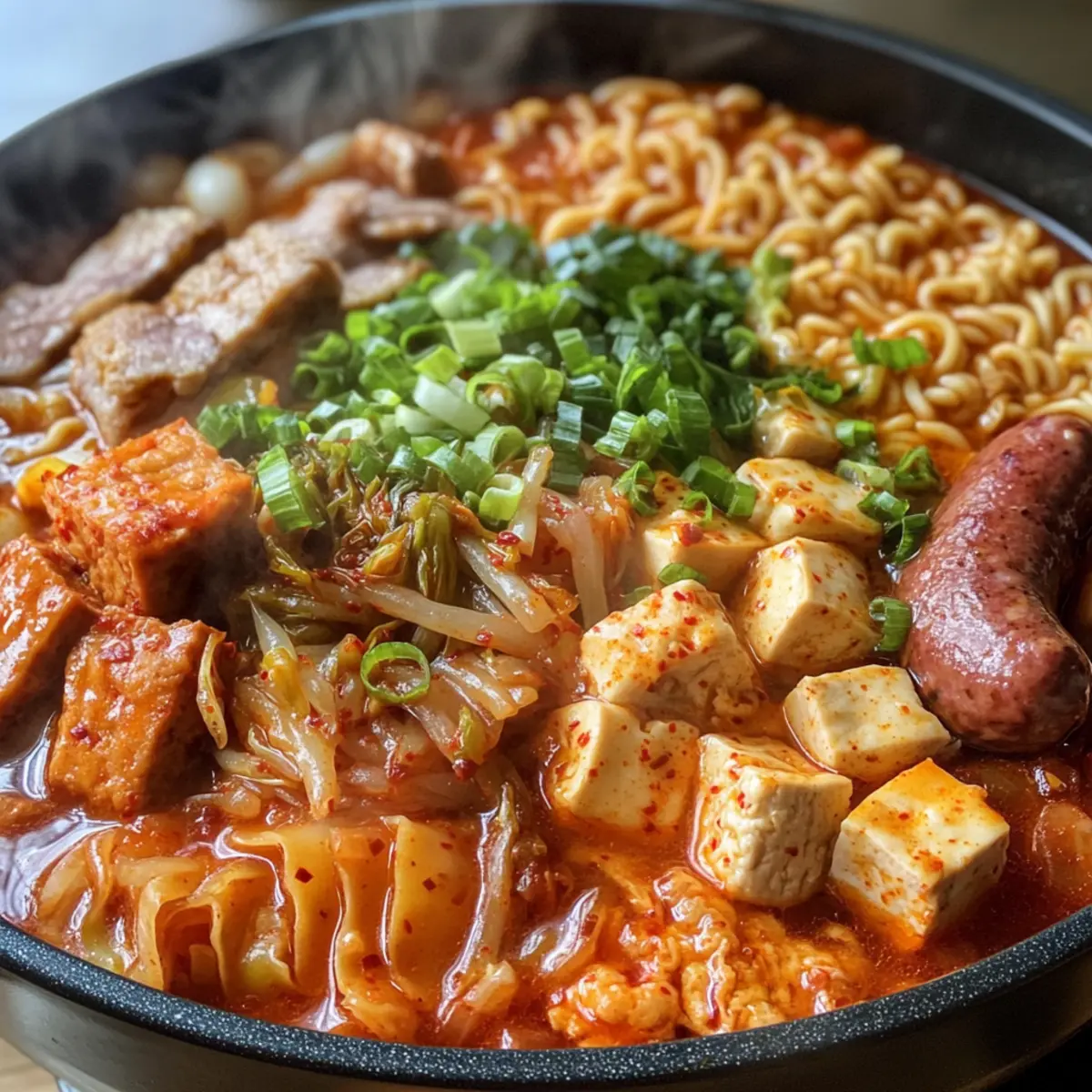
Why is Budae Jjigae a Must-Try?
Comforting Warmth: Budae Jjigae envelops you in a cozy embrace, perfect for chilly nights. Its rich and hearty flavor profile warms you from the inside out.
Endless Customization: Enjoy creative freedom by swapping in your favorite proteins or seasonal veggies, tailoring each bowl to fit your taste.
Time-Saving Delight: This one-pot wonder minimizes cleanup while delivering bold, satisfying flavors in less than an hour.
Cultural Richness: Dive into a dish with history, a blend of Korean tradition and American influences, telling a story in every bite.
Family-Friendly Appeal: Kids and adults alike will savor this fun, shared meal, making it an ideal choice for family dinners.
Get ready to impress your loved ones with this unforgettable classic and elevate your dinner game!
Budae Jjigae Ingredients
• Dive into the heart of this delightful stew with these must-have ingredients!
For the Broth
- Minced Garlic – Adds aromatic flavor to the base; fresh garlic enhances the taste.
- Gochugaru (Korean red pepper flakes) – Provides spice and vibrant color; adjust to your desired heat level.
- Gochujang (Korean red pepper paste) – Adds depth and sweetness; substitute with miso for a milder flavor.
- Soy Sauce – Contributes umami richness; low-sodium can be used for a healthier option.
- Mirin – Offers sweetness and acidity for balance; rice vinegar combined with sugar can also work.
- Sugar – Enhances overall flavor; can be omitted for a low-sugar preference.
- Black Pepper – Adds warmth and seasoning.
For the Protein
- Spam – Savory and satisfying; substitute with tofu for a vegetarian option.
- Sausages – Introduces a smoky flavor; any preferred sausage type will do.
- Tofu – Absorbs flavors well; firm tofu holds up better in the stew.
For the Heart of the Dish
- Rice Cakes (tteok) – Provides essential chewy texture; can be replaced with noodles if unavailable.
- Onion – Adds sweetness and depth; shallots can be used for a milder taste.
- Enoki Mushrooms – Delicate texture; substitute with shiitake mushrooms for a different flavor.
- Kimchi – Brings essential tanginess and heat; adjust according to spice preference.
- Ramen Noodles – Soaks up the broth flavor quickly; any instant noodles can substitute if needed.
For the Final Touch
- Cheese – Adds creamy richness when melted on top; cheddar or mozzarella work best.
Gather these ingredients to create the unforgettable Budae Jjigae, a true embodiment of comfort food!
Step‑by‑Step Instructions for Budae Jjigae
Step 1: Prepare the Flavorful Sauce
In a mixing bowl, combine 2 tablespoons of minced garlic, 1 tablespoon of gochugaru, 2 tablespoons of gochujang, 3 tablespoons of soy sauce, 2 tablespoons of mirin, 1 teaspoon of sugar, and a dash of black pepper. Whisk these ingredients together until smooth, creating a vibrant red sauce bursting with flavor. Set aside as this will be the foundation of your delightful Budae Jjigae.
Step 2: Layer the Ingredients
In a large shallow pot, arrange slices of spam, sausage, and tofu in a single layer, followed by a handful of rice cakes, sliced onions, enoki mushrooms, and your chosen kimchi. This layering not only looks beautiful but also ensures each ingredient cooks evenly and absorbs the rich flavors. Ensure that everything is packed snugly together for a hearty stew experience.
Step 3: Pour in the Broth
Carefully pour your prepared sauce over the layered ingredients, followed by 4 cups of chicken broth. The combination of sauce and broth should just cover the ingredients in the pot. This step is key for infusing the Budae Jjigae with warmth and depth.
Step 4: Bring to a Boil
Cover the pot and place it over medium heat. Allow the stew to come to a gentle boil, which should take about 5-7 minutes. You’ll hear the comforting sounds of bubbling as the flavors meld together. Once boiling, remove the lid to let the steam escape, giving the stew a chance to intensify in flavor.
Step 5: Add Noodles and Cheese
Once the stew is bubbling vigorously, add in the ramen noodles, distributing them evenly across the pot. Sprinkle shredded cheese on top, allowing it to melt as you cover the pot again. Cook for an additional 4-5 minutes until the noodles are tender and have soaked up the broth’s vibrant flavor.
Step 6: Garnish and Serve
After cooking, remove the pot from heat and let it sit for a couple of minutes. For a pop of color and flavor, garnish with chopped green onions right before serving. Ladle the warm Budae Jjigae into bowls and serve hot—preferably over a bed of steamed rice for a complete meal experience.

Budae Jjigae Variations & Substitutions
Feel free to get creative with your Budae Jjigae, as there are countless ways to tailor this delicious stew to your liking!
-
Vegetarian: Substitute all meat with tofu and add hearty vegetables like mushrooms and zucchini for a plant-based delight. This gives you a rich texture while keeping it satisfying.
-
Gluten-Free: Use tamari instead of soy sauce to maintain the savory notes in a gluten-free version. Pair it with gluten-free noodles for the same comforting experience.
-
Spicy Kick: If you love heat, toss in sliced jalapeños or a drizzle of chili oil to elevate the bold flavors. You can adjust based on your spice tolerance.
-
Cheesy Twist: Try adding cream cheese or pepper jack cheese for a different cheesy flavor. It melts beautifully, creating a delightful creaminess that complements the spices.
-
Extra Veggies: Add more color and nutrition by including spinach, carrots, or bell peppers. These will not only brighten the dish but also provide an extra crunch.
-
Heartier Base: Swap instant ramen for udon or soba noodles for a more substantial texture. They hold up wonderfully in the flavorful broth.
-
Savory Umami: Mix in miso paste along with gochujang for a richer depth of flavor. This twist brightens the overall taste while adding some authentic essence.
-
Classic Protein Swap: If you have other proteins at hand, try ground turkey or beef for a hearty, traditional touch that brings a different flavor profile.
With these variations and substitutions, your Budae Jjigae experience can be as unique and delightful as you wish! And if you’re curious to try other Korean dishes, check out this delicious kimchi fried rice recipe or explore a simple guide on how to make homemade kimchi!
Make Ahead Options
Budae Jjigae is a fantastic dish for meal prep enthusiasts, allowing you to save time on busy weeknights! You can prepare the flavorful sauce up to 24 hours in advance, storing it in an airtight container in the refrigerator. Additionally, chop and layer the proteins (spam, sausage, and tofu) and vegetables (onion, mushrooms, and kimchi) in the pot; this can also be done 1-3 days ahead. When you’re ready to cook, simply pour the sauce and broth over the layered ingredients, bring to a boil, add the ramen noodles and cheese, then simmer until everything is heated through. This prep ensures you’ll enjoy the same bold flavors and satisfying textures with minimal effort on the day of serving!
How to Store and Freeze Budae Jjigae
Fridge: Store leftovers in an airtight container for up to 3 days. Reheat gently on the stove, adding a splash of broth if needed for moisture.
Freezer: Budae Jjigae can be frozen for up to 2 months. Allow it to cool completely before transferring to freezer-safe containers or bags.
Reheating: Thaw overnight in the fridge before reheating on the stove. Stir occasionally and add some broth to rejuvenate the flavors.
Avoid Overcooking: When reheating, be cautious with the noodles; they may become mushy if overcooked. Enjoy the comforting warmth of Budae Jjigae time and again!
What to Serve with One-Pot Budae Jjigae?
For a complete and satisfying meal, you’ll want to complement the hearty warmth of this Korean Army stew with delightful accompaniments that elevate the experience.
-
Steamed Rice:
A bowl of fluffy rice soaks up the rich broth, providing a neutral base to balance the bold flavors of the stew. -
Pickled Vegetables:
Slightly tangy and crunchy, pickled vegetables like radish or cucumber add a refreshing contrast that brightens each bite. -
Korean Pancakes (Pajeon):
These savory pancakes, filled with green onions and a hint of spice, make for a delightful side that pairs perfectly with the stew’s savory notes. -
Szechuan Cucumber Salad:
This cool, spicy salad enhances the meal’s texture, offering a crisp, palate-cleansing bite that dances with flavor. -
Garlic Naan Bread:
Soft and warm garlic naan is perfect for dipping, bringing a different yet harmonious texture to your meal. -
Korean Rice Cakes:
Chewy and slightly sweet, they add authenticity and are fantastic for those who want to savor every bit of broth. -
Cold Beer or Soju:
A chilled beer or a shot of soju complements the spicy flavors of the Budae Jjigae, making for a refreshing sip with your meal.
Every choice draws from the heart of Korean cuisine while enhancing the comforting experience of Budae Jjigae, making your dinner table a celebration of flavor and warmth!
Expert Tips for Budae Jjigae
-
Adjust Spice Level: Start with less gochugaru and gochujang, then taste and add more to achieve your desired heat for the Budae Jjigae.
-
Layer Properly: For even cooking, make sure to layer the ingredients as suggested. This ensures every bite is packed with flavor and the textures meld beautifully.
-
Watch the Noodles: Keep an eye on your ramen noodles while they cook; overcooking can lead to a mushy texture that detracts from the stew’s heartiness.
-
Experiment Freely: Don’t hesitate to swap proteins or add more vegetables like spinach or zucchini, to cater to your personal taste and pantry availability.
-
Storage Tips: If you have leftovers, store them in an airtight container in the fridge. Reheat gently on the stove to keep the Budae Jjigae warm and delicious.
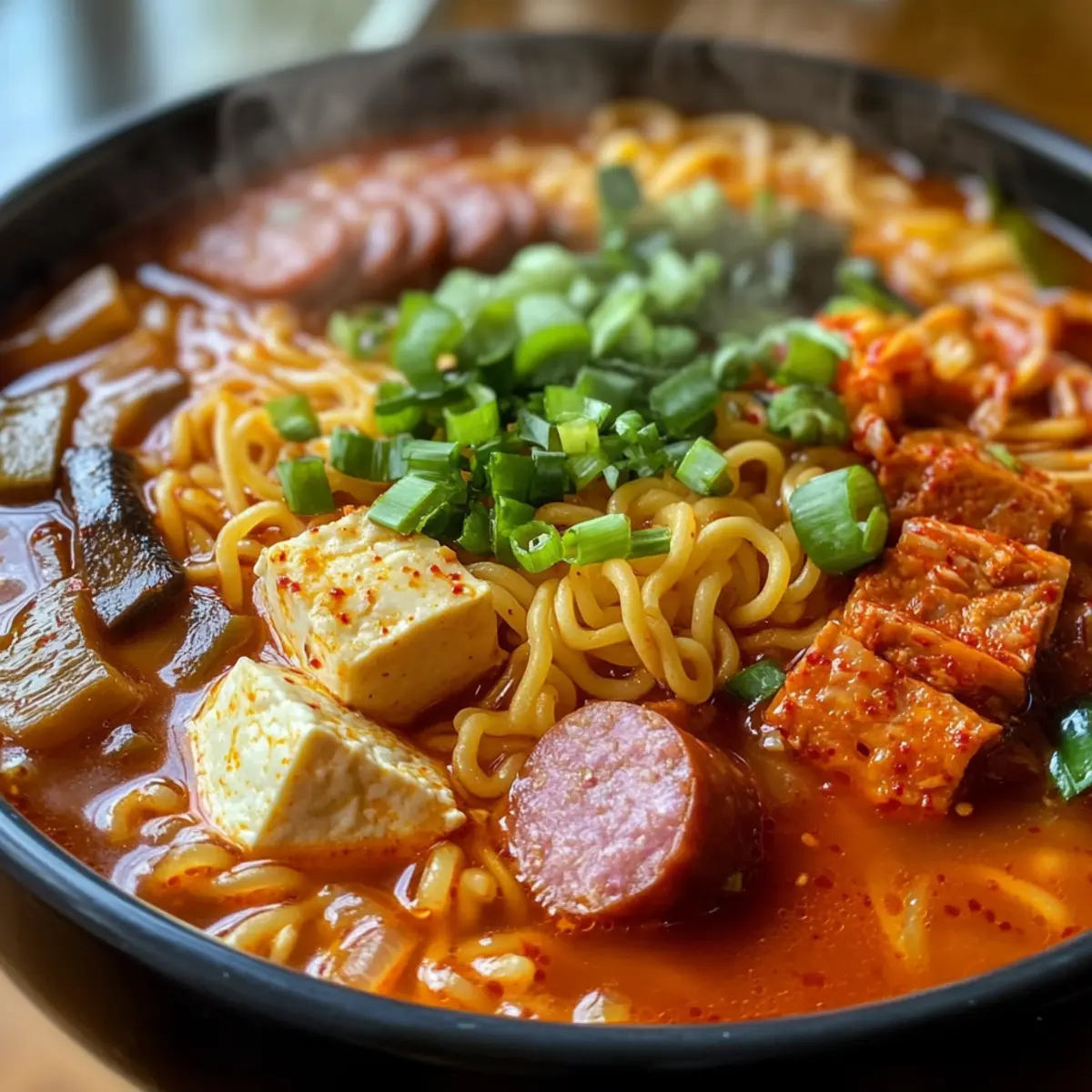
Budae Jjigae Recipe FAQs
What ingredients should be ripe or fresh for Budae Jjigae?
Absolutely! Using fresh ingredients will elevate your Budae Jjigae’s flavor immensely. Look for firm tofu without dark spots, vibrant kimchi with a tangy scent, and fresh garlic that isn’t sprouted. Choose sausages and spam that are within their expiration date for the best texture and taste.
How should I store leftover Budae Jjigae, and how long will it last?
Store any leftovers in an airtight container in the refrigerator for up to 3 days. To keep it fresh, make sure to cool the stew completely before sealing it. When you’re ready to enjoy it again, gently reheat it on the stove, adding a splash of broth if it looks too thick.
Can I freeze Budae Jjigae, and what’s the best method?
Yes, you can freeze Budae Jjigae! Allow it to cool to room temperature and then transfer it to freezer-safe containers or bags. Be sure to leave some space at the top of the container for expansion. It can be frozen for up to 2 months. When you’re ready to eat, simply thaw it overnight in the fridge and reheat on the stove, adding some broth for a nice, creamy consistency.
What if my noodles are overcooked or mushy?
If you find your noodles have turned mushy, don’t worry! For future preparations, keep an eye on the cooking time and add the noodles towards the end. If you’ve already cooked them too much, try mixing in some fresh noodles or serve the stew over rice instead for a delightful twist!
Is Budae Jjigae suitable for special dietary restrictions?
Definitely! You can make Budae Jjigae vegetarian-friendly by substituting spam and sausages with tofu or other plant-based proteins. Additionally, make sure your broth is vegetable-based if you want to keep it vegetarian. For those with allergies, check all labels, especially for gluten in soy sauce, and opt for gluten-free alternatives as needed.

Savor the Comfort of Homemade Budae Jjigae Today
Ingredients
Equipment
Method
- In a mixing bowl, combine the broth ingredients and whisk until smooth.
- In a large shallow pot, layer the protein, rice cakes, onion, mushrooms, and kimchi snugly.
- Pour the prepared sauce and 4 cups of chicken broth over the layered ingredients.
- Cover and cook over medium heat until gently boiling, about 5-7 minutes.
- Add ramen noodles and sprinkle cheese on top, cooking for an additional 4-5 minutes.
- Garnish with chopped green onions and serve hot, preferably over rice.
Leave a Reply