
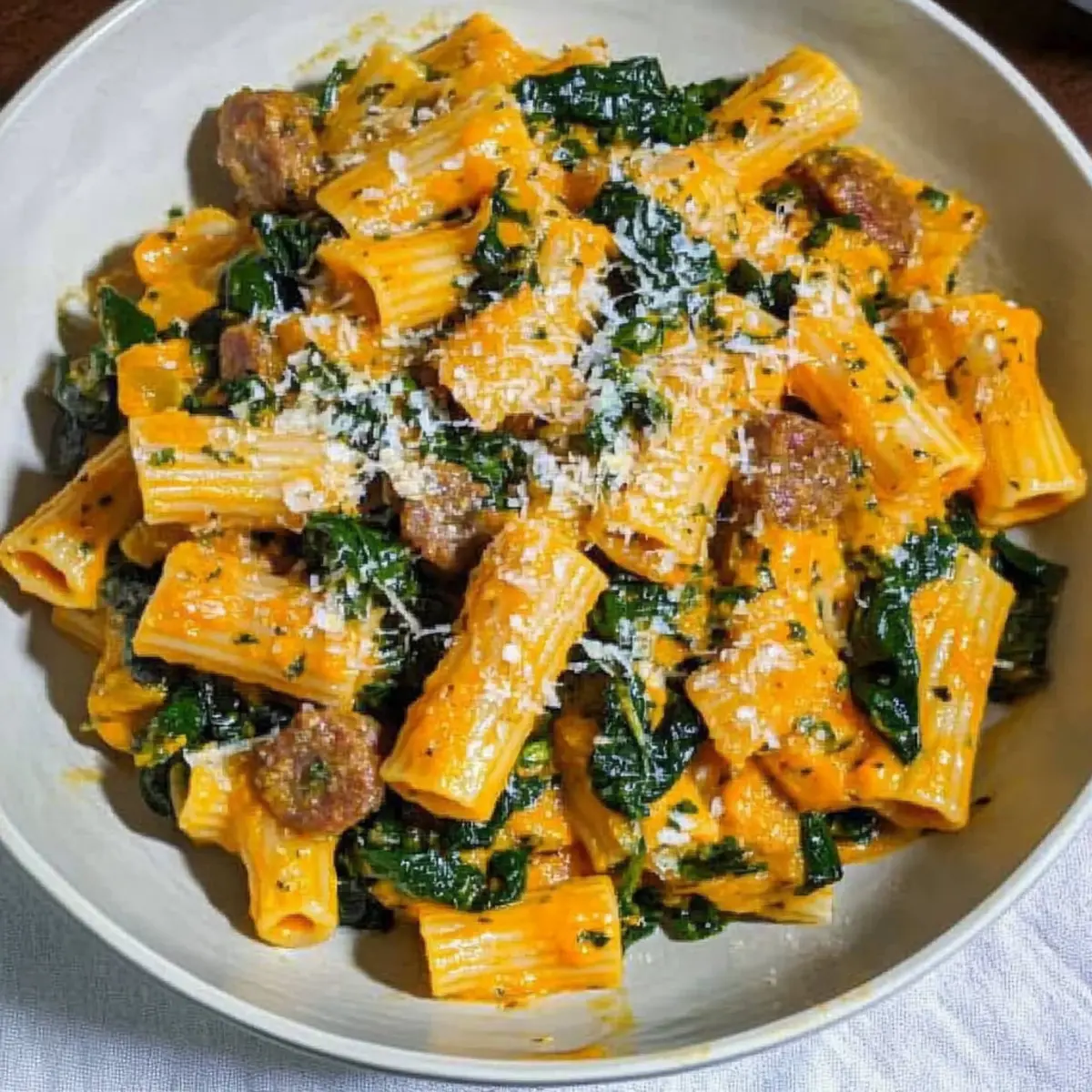
There’s something magical about transforming a humble vegetable into a creamy, rich sauce that comforts the soul. That’s exactly what you can expect from my Butternut Squash Pasta with Sausage and Spinach. This dish is not only a gathering favorite but also perfect for weeknight dinners when you want a taste of cozy indulgence without spending hours in the kitchen. With its naturally sweet, velvety sauce and the hearty addition of savory sausage, this recipe brings warmth and satisfaction to the table. Whether you’re looking for a gluten-free option or a vegetarian twist, I’ve got you covered. So, are you ready to whip up a pasta dish that’s both simple and sublime? Let’s dive in!
Why is Butternut Squash Pasta a Must-Try?
Comfort Food Redefined: This creamy butternut squash pasta brings a new level of warmth to your meals, perfect for chilly evenings.
Versatile Options: Adapt it easily with vegan and gluten-free alternatives that still pack unbeatable flavor.
Rich and Savory: The sweet butternut squash sauce pairs beautifully with savory sausage and fresh spinach, creating a delightful balance.
Quick and Easy: With minimal prep time and a straightforward method, this dish can be on your table in under 30 minutes—a true lifesaver for busy nights!
Crowd-Pleasing Delight: Whether you’re cooking for family or entertaining friends, this recipe will impress everyone at the table.
If you love comforting, creamy dishes, you might also enjoy my Crockpot Garlic Pasta or Parmesan Chicken Pasta.
Butternut Squash Pasta Ingredients
• Get ready to create a creamy, comforting delight!
For the Sauce
- Butternut Squash – 1 medium squash (2-3 cups cubed); creates a smooth, creamy sauce. Substitute with pumpkin if unavailable.
- Garlic – 3 cloves, minced; adds aroma and flavor without any substitutes needed.
- Shallot – 1 small, finely chopped (or half an onion); enhances the flavor base beautifully.
- Chicken Broth – 1 cup (or vegetable broth for vegetarian option); serves as the liquid base for the sauce.
- Heavy Cream – ½ cup; creates creaminess, or substitute with half-and-half, almond, or coconut milk for a lighter option.
- Nutmeg – Just a pinch; adds depth of flavor that complements the butternut squash.
For the Pasta
- Pasta – 12 oz short pasta (penne, rigatoni, or fusilli); acts as the hearty base of the dish. Use gluten-free pasta for the perfect gluten-free option.
For the Add-ins
- Sausage – 8 oz Italian sausage (spicy or mild); contributes savory flavor. Substitute with turkey sausage or omit for a vegetarian version.
- Spinach – 4 cups fresh spinach (or frozen, properly drained); provides nutrition and a beautiful pop of color.
For the Finish
- Parmesan Cheese – ½ cup, freshly grated (plus extra for serving); adds richness, with nutritional yeast as a non-dairy substitute if desired.
- Olive Oil – 2 tbsp; perfect for sautéing and roasting; any neutral oil works well.
- Salt and Pepper – To taste; essential for seasoning and elevating the overall dish.
- Red Pepper Flakes – Optional; for those who enjoy a hint of spice.
Prepare to indulge in a bowl of creamy butternut squash pasta that’s sure to warm your heart and satisfy your cravings!
Step‑by‑Step Instructions for Creamy Butternut Squash Pasta with Sausage and Spinach
Step 1: Prep the Butternut Squash
Begin by peeling, seeding, and cubing the butternut squash into small pieces. Preheat your oven to 400°F (200°C) and spread the squash cubes on a baking sheet. Roast the squash for 25-30 minutes until they’re tender and starting to caramelize, stirring halfway through for even cooking. Alternatively, you can steam the cubes in a pot with a lid for 10-12 minutes until soft.
Step 2: Cook Pasta
While roasting the squash, bring a large pot of salted water to a boil and cook the pasta of your choice until al dente, usually about 8-10 minutes. Reserve 1 cup of the pasta cooking water before draining the pasta to ensure your sauce has the right consistency. Set the pasta aside in the colander, allowing any excess water to drain while you move on to the next step.
Step 3: Sauté Sausage
In a large skillet over medium heat, add 2 tablespoons of olive oil, and heat it for about a minute. Add the Italian sausage, breaking it apart with a wooden spoon, and cook for 8-10 minutes until browned and cooked through. Once done, transfer the cooked sausage to a plate, leaving any rendered fat in the skillet to enhance the flavor of your butternut squash pasta.
Step 4: Sauté Garlic and Shallots
In the same skillet, add the finely chopped shallot and sauté for about 2 minutes until softened and fragrant. Then, stir in the minced garlic, cooking for an additional 1-2 minutes until the garlic is golden but not burnt. This aromatic base will be essential for the creamy sauce in your butternut squash pasta.
Step 5: Make Sauce
Once the butternut squash is roasted, combine it with 1 cup of chicken (or vegetable) broth, ½ cup of heavy cream, and a pinch of nutmeg in a blender. Puree the mixture until smooth and creamy, about 1-2 minutes. The combination of the sweet squash and cream will create a luscious sauce that beautifully coats your pasta.
Step 6: Combine in Pan
Return the creamy butternut squash sauce back to the skillet with the sautéed shallots and garlic over low heat. Add the cooked pasta and browned sausage, tossing everything together. Gradually incorporate reserved pasta water, one ladle at a time, until you achieve your desired sauce consistency, ensuring the pasta is well-coated.
Step 7: Add Spinach
Gently fold in the fresh spinach into the skillet, cooking for an additional 2-3 minutes, or until wilted. This step not only adds vibrant color but also enhances the nutritional value of your butternut squash pasta. Finally, sprinkle in the freshly grated Parmesan cheese, stirring until melted and well combined, adjusting seasoning with salt and pepper to taste.
Butternut Squash Pasta Variations
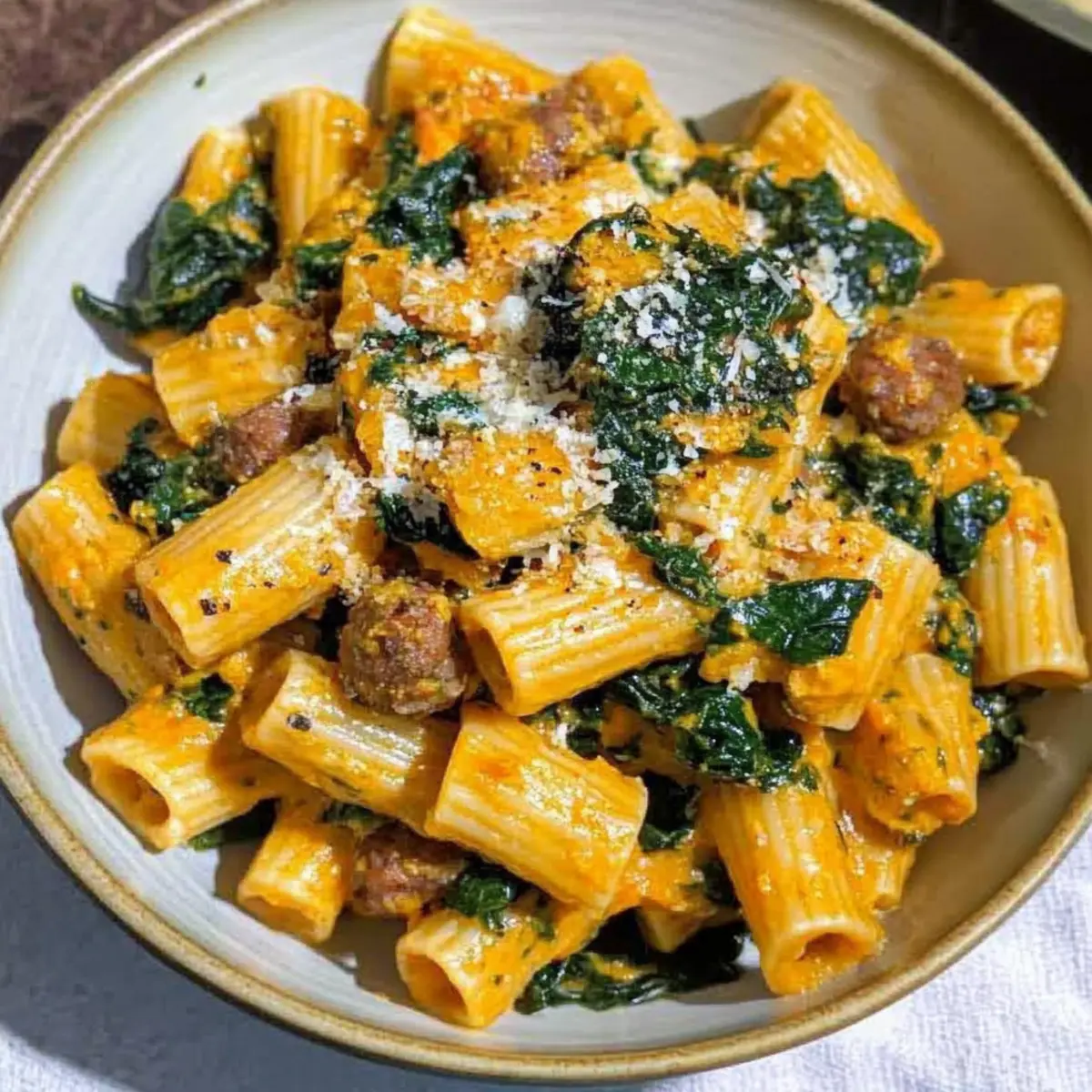
Feel free to customize this recipe to match your preferences or dietary needs—there’s something for everyone!
-
Vegan Delight: Replace sausage with hearty mushrooms or chickpeas for a satisfying meatless option.
Transform the dish by adding extra herbs and spices to enhance the flavor profile further. -
Gluten-Free Switch: Opt for gluten-free pasta made from brown rice or chickpeas.
Your delicious creamy sauce will still accompany the pasta, making it perfect for gluten-sensitive diners. -
Creamy and Light: Swap heavy cream for almond or coconut milk for a lighter sauce.
This may alter the richness but will still deliver a deliciously creamy experience. -
Extra Flavor: Add a handful of sun-dried tomatoes or roasted red peppers to the sauce.
These ingredients will pack a flavorful punch that complements the dish wonderfully! -
Spice it Up: For a touch of heat, stir in red pepper flakes or diced jalapeños.
Adjust the amount according to your spice tolerance, making it as fiery or mild as you like. -
Nutty Addition: Sprinkle in some toasted pine nuts or walnuts for added texture.
This makes for delightful bites within the creamy sauce, enhancing the overall dish. -
Herb Infusion: Toss fresh herbs like basil or thyme into the mix right before serving.
Their aromatic qualities will elevate the dish and bring a burst of freshness. -
Cheesy Twist: Go wild with cheese; mix in goat cheese or feta for a tangy flavor.
It can bring a delightful creaminess that complements the butternut squash beautifully.
If you’re seeking even more pasta inspiration, take a look at my Bacon Ranch Pasta or try the Protein Beef Pasta. Each of these recipes can add a unique touch to your dinner table!
How to Store and Freeze Butternut Squash Pasta
Fridge: Store leftover butternut squash pasta in an airtight container in the fridge for up to 3 days. This will help maintain its creamy texture and flavor.
Freezer: If you want to freeze it, portion the pasta into freezer-safe containers. It will keep for up to 2 months, but be sure to leave space for expansion.
Reheating: To reheat, thaw in the fridge overnight and warm on the stove over low heat. Add a splash of broth or water to revive the sauce’s creaminess.
Avoiding Spoilage: Always cool the pasta completely before refrigerating or freezing to prevent condensation, which can cause spoilage.
What to Serve with Creamy Butternut Squash Pasta with Sausage and Spinach
There’s something magical about creating the perfect spread to complement your comforting pasta dish that warms the heart.
-
Garlic Bread: A crunchy, buttery addition that soaks up the creamy sauce beautifully, enhancing the entire meal experience.
-
Green Salad: Light and crisp, a simple mix of arugula, cherry tomatoes, and a zesty vinaigrette adds refreshing contrast to the rich flavors of the pasta.
-
Roasted Brussels Sprouts: These provide a delightful roastiness and slightly bitter profile that balances the sweet butternut squash, making for an elegantly tasty side.
-
Parmesan Breadsticks: Soft and cheesy, these pairs wonderfully with the creamy sauce, inviting another layer of indulgence to your cozy dinner.
-
White Wine Spritzer: A refreshing drink made from sparkling water and a touch of white wine keeps the flavors bright and lively, perfect for a dinner gathering.
-
Pumpkin Spice Muffins: To complete your meal with a sweet finish, indulge in these ppice-filled treats that echo the cozy comfort of your main dish. Their soft texture and warm spices will leave guests delighted.
Expert Tips for Butternut Squash Pasta
• Save Pasta Water: Keep some of the starchy pasta water handy; it helps adjust the sauce’s consistency and makes it cling to the pasta perfectly.
• Roasting Technique: Try to roast the butternut squash until caramelized for deeper flavors. Shuffle the cubes halfway through cooking for even roasting.
• Texture Preference: For a rustic feel, mash the roasted squash by hand instead of blending it for a chunkier sauce.
• Nutmeg Matters: Don’t skip the nutmeg! Just a pinch enhances the creamy sauce and brings out the butternut squash’s natural sweetness.
• Sausage Alternatives: Feel free to substitute sausage with mushrooms or chickpeas for a hearty vegetarian version, keeping the dish delectable and satisfying.
Make Ahead Options
These Butternut Squash Pasta bowls are ideal for meal prep! You can roast the butternut squash and cook the sausage up to 24 hours in advance, storing them in airtight containers in the refrigerator to maintain their flavor and texture. Additionally, you can also cook the pasta up to 3 days prior, just be sure to toss it with a little olive oil to prevent sticking. When you’re ready to enjoy your meal, simply reheat the squash and sausage, blend them with broth and cream to create the sauce, and then combine it with the pasta and fresh spinach. This approach not only saves you time but keeps your creamy Butternut Squash Pasta tasting just as delicious!
Butternut Squash Pasta with Sausage and Spinach Recipe FAQs
How do I choose a ripe butternut squash?
Absolutely! When selecting a butternut squash, look for a squash that is firm and heavy for its size, with a smooth, matte skin. Avoid any squashes that have soft spots or blemishes, as these could indicate spoilage. A ripe butternut squash will have a rich tan color and feel solid in your hands.
What is the best way to store leftover butternut squash pasta?
Very! Leftover butternut squash pasta should be stored in an airtight container in the fridge. It will stay fresh for up to 3 days. Remember to let it cool completely before sealing it up to avoid condensation, which can make the creamy sauce watery.
Can I freeze butternut squash pasta?
You bet! To freeze your butternut squash pasta, portion it into freezer-safe containers and store it for up to 2 months. Leave a little space at the top of each container to allow for expansion as it freezes. When you’re ready to enjoy it again, simply thaw it overnight in the fridge and reheat gently on the stovetop, adding a splash of broth or water to bring back its creamy texture.
What can I do if my butternut squash sauce is too thick?
No worries! If your sauce is too thick, simply add a bit of the reserved pasta cooking water, one ladle at a time, until it reaches your desired consistency. The starchy water helps the sauce adhere to the pasta while maintaining the creamy texture.
Can I make this dish vegan or gluten-free?
Absolutely! To convert this butternut squash pasta into a vegan dish, use vegetable broth instead of chicken broth, swap heavy cream for coconut milk or a non-dairy alternative, and omit the Parmesan cheese or substitute with nutritional yeast. For a gluten-free version, just replace the standard pasta with a gluten-free pasta of your choice.
Is this recipe safe for pets or those with allergies?
Very! This recipe doesn’t include any ingredients that are particularly toxic to pets, but it’s always advisable to check with your veterinarian to be sure. For allergies, be mindful of any specific ingredient substitutions, especially with sausage and dairy, to avoid common allergens like gluten or dairy.
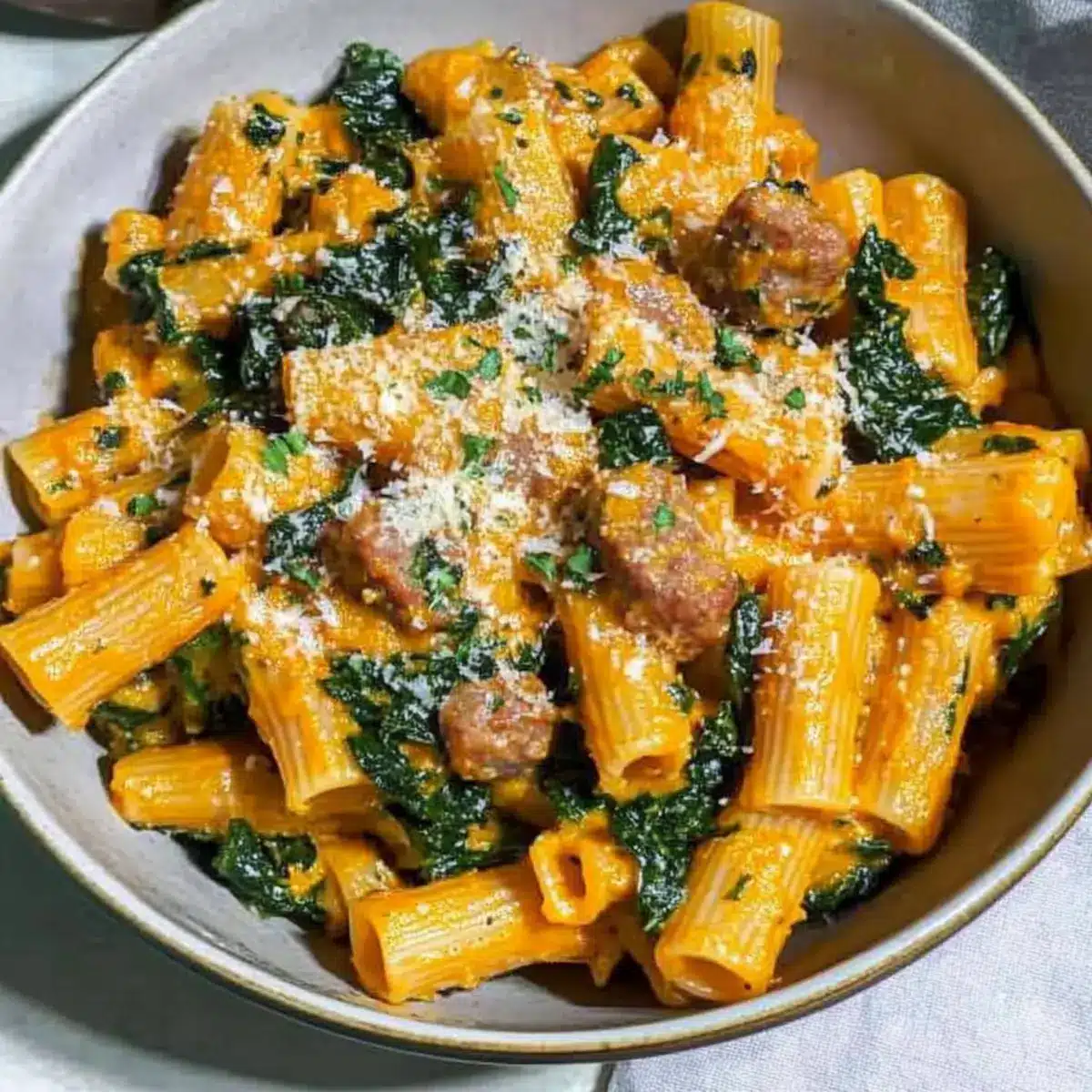
Creamy Butternut Squash Pasta That's Pure Comfort in a Bowl
Ingredients
Equipment
Method
- Prep the butternut squash by peeling, seeding, and cubing it into small pieces. Preheat your oven to 400°F (200°C) and spread the squash cubes on a baking sheet. Roast for 25-30 minutes until tender and caramelized, stirring halfway through.
- While roasting, bring a large pot of salted water to a boil and cook the pasta until al dente, about 8-10 minutes. Reserve 1 cup of pasta water before draining.
- In a large skillet over medium heat, add olive oil. After about a minute, add the Italian sausage and cook for 8-10 minutes until browned. Transfer to a plate once cooked.
- In the same skillet, add the finely chopped shallot and sauté for about 2 minutes until softened. Stir in the minced garlic and cook for an additional 1-2 minutes until golden.
- In a blender, combine roasted butternut squash, chicken broth, heavy cream, and nutmeg. Puree until smooth, about 1-2 minutes.
- Return the sauce to the skillet with sautéed shallots and garlic over low heat. Mix in the pasta and sausage. Gradually add reserved pasta water until the desired consistency is reached.
- Gently fold in the spinach and cook until wilted, about 2-3 minutes. Stir in the Parmesan cheese until melted, adjusting seasoning with salt and pepper.
Leave a Reply