
In the bustling streets of Seoul, a dish emerges that captures both comfort and excitement: Rabokki! This delightful combination of ramen and tteokbokki brings together chewy rice cakes and tender noodles, smothered in a savory, spicy sauce that warms the soul. If you’re craving a quick meal that feels like a warm hug, this recipe is your answer. Not only is it super easy to whip up for lunch or dinner, but it also satisfies those late-night snack cravings with its magical blend of flavors. The inviting heat from gochugaru and the umami richness from toppings like fish cakes and hard-boiled eggs will leave you wanting more. Are you ready to embark on your culinary adventure with Rabokki? Let’s dive in and discover how to make this cozy dish come to life!
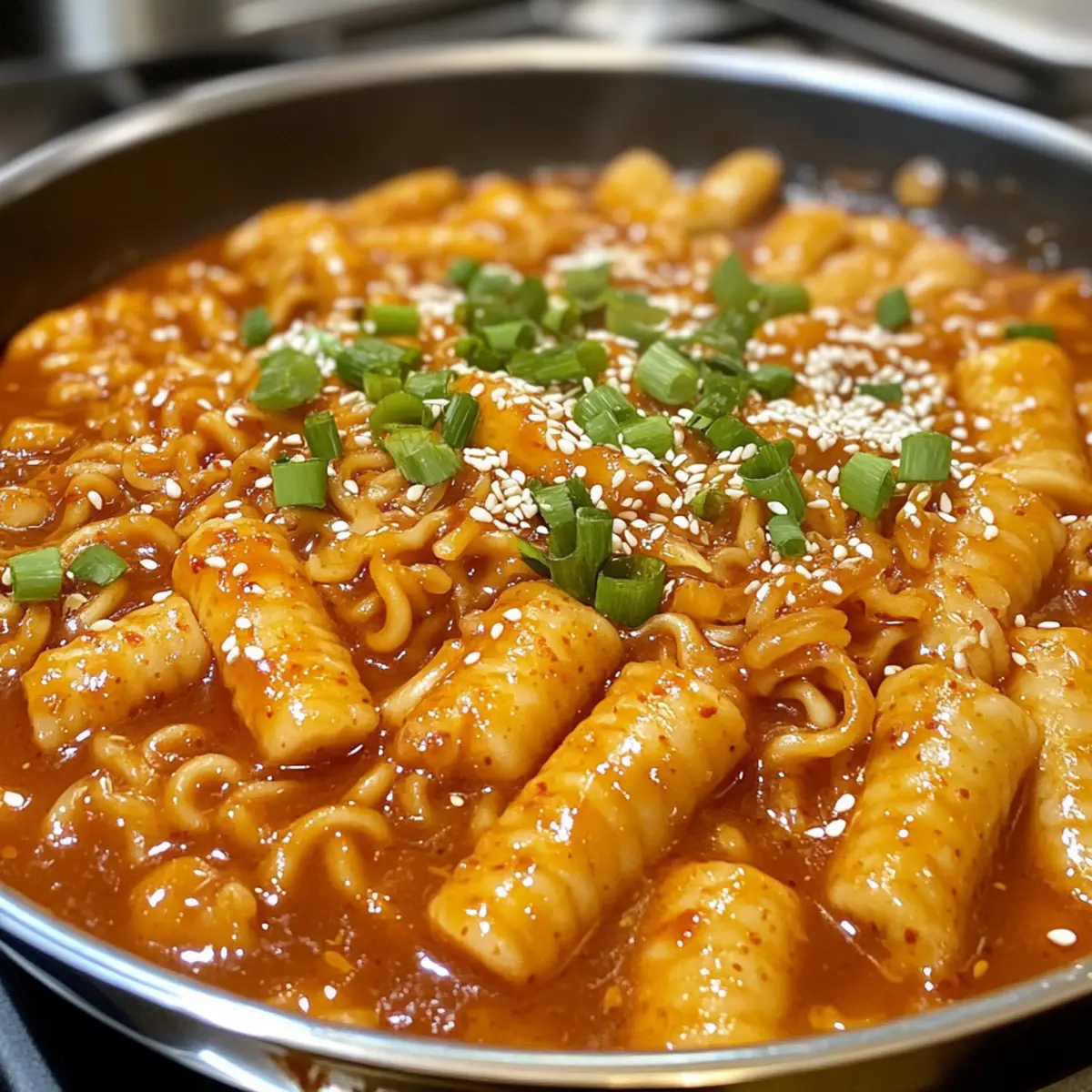
Why is Rabokki the perfect comfort dish?
Comforting Combination: Rabokki uniquely blends two beloved dishes—ramen and tteokbokki—into one extraordinary meal.
Quick and Easy: With minimal prep and cooking time, this dish is perfect for any busy schedule.
Spice Lovers Rejoice: The fiery kick from gochugaru warms your soul and tantalizes your taste buds.
Versatile: Customize it with your favorite proteins or vegetables, making it a canvas for your culinary creativity.
Crowd-Pleasing: Serve it at gatherings or cozy nights in, and watch everyone fall in love with this hearty dish.
Cultural Delicacy: Experience a taste of Korean street food culture right in your home! Whether you enjoy it as a main dish or a late-night snack, you can’t go wrong with Rabokki. Plus, if you’re a fan of quick meals, check out my recipe for Chicken Ramen Garlic for another flavor-packed option!
Rabokki Ingredients
• Discover the essentials for making delicious Rabokki!
For the Sauce
- Soy Sauce – Provides saltiness and enhances the overall flavor; substitute with tamari for a gluten-free option.
- Sugar – Balances the flavors with sweetness; brown sugar can be used for a deeper flavor profile.
- Gochugaru – Korean chili powder that adds heat and color; substitute with paprika for a milder dish.
- Gochujang – Korean chili paste that contributes spiciness and umami; can be swapped with a mix of sriracha and a sweetener for a less intense alternative.
- Minced Garlic – Offers aromatic depth; fresh garlic is preferred, but powdered garlic can work in a pinch.
For the Broth
- Anchovy Broth (3½ cups water + 2 anchovy stock tablets) – Forms the base for the sauce; use vegetable broth for a vegetarian option.
For the Veggies
- Cabbage – Adds crunch and sweetness; substitute with bok choy or spinach.
- Green Onion – Provides fresh flavor; can be replaced with chives if unavailable.
For the Main Ingredients
- Rice Cakes – The star of Rabokki; they bring chewiness; use instant tteokbokki or substitute with thick pasta if necessary.
- Fish Cakes – Adds protein and texture; optional for vegetarians; can use tofu as a substitute.
- Hard-Boiled Eggs – Enhance heartiness and provide creaminess; omit for a vegan version or use tofu.
- Ramen Noodles – Base of the dish that cooks quickly; instant ramen is ideal, but any quick-cooking noodle will work.
For Garnish
- Chopped Green Onions – Adds a burst of flavor and freshness; sprinkle on top before serving.
- White Sesame Seeds – Enhance presentation and add a nutty flavor; use generously as a final touch.
Equip yourself with these ingredients, and you’re just moments away from indulging in your very own bowl of Rabokki—spicy ramen with tteokbokki that promises a heartwarming experience!
Step‑by‑Step Instructions for Rabokki – Ramen with Tteokbokki
Step 1: Prepare the Sauce
In a mixing bowl, combine soy sauce, sugar, gochugaru, gochujang, and minced garlic. Stir them well until the sugar completely dissolves and the mixture is smooth, taking about 2-3 minutes. This savory blend will be the heart of your Rabokki, so make sure it’s well combined and set it aside for a moment.
Step 2: Cook the Broth
In a large pot, bring 3½ cups of water to a rolling boil over medium heat and add the anchovy stock tablets. Stir until the tablets dissolve into the water, creating a flavorful broth. Once boiling, add the prepared sauce and let it simmer for about 3-5 minutes to blend the flavors beautifully.
Step 3: Add Vegetables
Next, toss in the chopped cabbage and green onions, stirring them into the bubbling broth. Then, add the rice cakes, allowing them to soak in the savory mixture. Let everything simmer for about 8-10 minutes, or until the cabbage becomes tender, and the sauce thickens slightly, enveloping the ingredients.
Step 4: Incorporate Proteins
Create a space in the center of the pot for the protein. Add the fish cakes and halved hard-boiled eggs, letting them gently nestle into the sauce. Allow them to heat through for an additional 3-4 minutes, ensuring that the Rabokki is both hearty and satisfying.
Step 5: Cook the Noodles
Uncover the pot and place the ramen noodles directly in the center above the other ingredients. Cover the pot again and simmer for 3-4 minutes until the noodles are soft and fully cooked. Check the noodles for doneness, ensuring they’re tender but not mushy for the perfect Rabokki texture.
Step 6: Garnish & Serve
Once everything is cooked, give the pot a gentle stir. Serve the steaming hot Rabokki in bowls, garnishing with chopped green onions and a sprinkle of white sesame seeds for added flavor and visual appeal. Enjoy this comforting dish while it’s warm for the best experience!
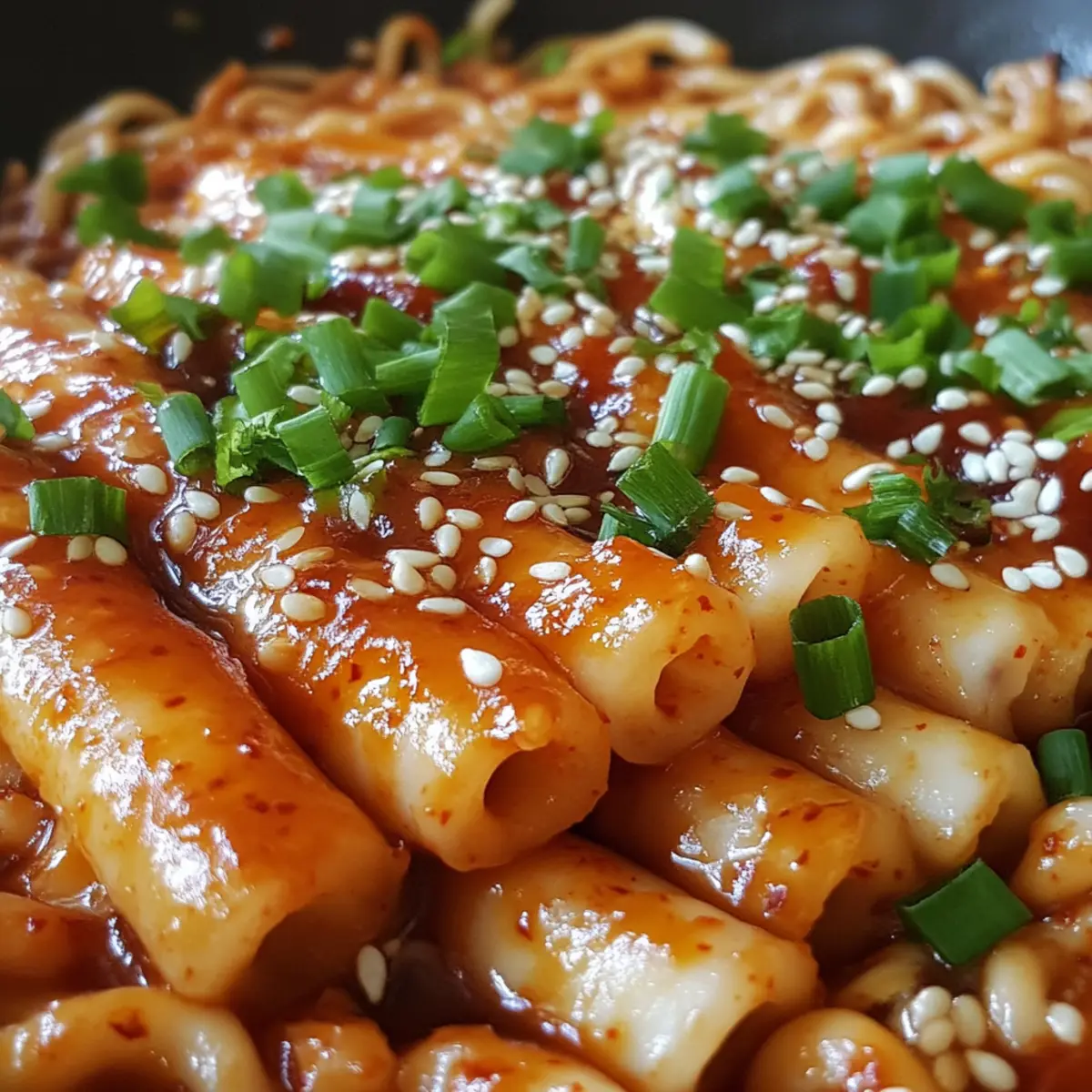
What to Serve with Quick & Easy Rabokki?
Looking to create a satisfying meal that perfectly complements your spicy, chewy Rabokki?
- Pickled Vegetables: These add a crunchy, tangy contrast that brightens the dish, enhancing each bite of delightful spice.
- Korean Fried Chicken: Crispy and savory, this crowd-pleaser brings a delightful crunch that pairs wonderfully with the soft textures of Rabokki.
- Steamed Broccoli: The mild flavor and vibrant color of steamed broccoli not only provide nutrition but also balance the spice of the noodle dish beautifully.
- Seaweed Salad: Light and refreshing, seaweed salad offers a burst of umami and oceanic notes that elevate the meal’s flavor profile.
- Egg Drop Soup: Serve a bowl of this comforting soup on the side. Its warm, savory broth complements Rabokki’s heartiness perfectly.
- Cold Beer or Soju: An ice-cold drink helps mellow the heat while enhancing the fusion flavors of your Korean meal, making every bite even more enjoyable.
- Fruit Sorbet: For dessert, a fruity sorbet is the perfect light finish, cleansing your palate with a sweet yet refreshing note.
Combine these delightful options with your Rabokki for a comforting and vibrant dining experience that will leave everyone satisfied!
How to Store and Freeze Rabokki
Fridge: Store any leftover Rabokki in an airtight container for up to 2 days. Reheat on the stove with a splash of water to maintain moisture and prevent drying.
Freezer: If you want to freeze Rabokki, do so without the noodles. Place in a freezer-safe container for up to 1 month. When ready to enjoy, thaw in the fridge overnight before reheating.
Reheating: For best results, reheat your Rabokki in a pot on medium heat. Add a little water or broth to help revive the sauce and ensure everything is warm throughout.
Avoiding Texture Loss: Note that reheated noodles may become mushy, so you may consider preparing fresh ramen when enjoying leftovers from your Rabokki.
Expert Tips for Rabokki
- Balance the Sauce: Before adding the noodles, taste the sauce for a perfect blend of flavors. Adjust by adding extra gochugaru for heat if needed.
- Prevent Sticking: Use a non-stick pot to keep the rice cakes from clumping together while simmering. This ensures a pleasant texture.
- Watch the Noodles: Avoid overcooking the ramen noodles; they should be tender yet firm. Check them regularly for the best texture.
- Customize Your Heat: If you’re sensitive to spice, start with a lesser amount of gochugaru and gochujang, then slowly adjust to taste.
- Serve Fresh: Enjoy your Rabokki immediately after cooking. Leftovers can lose their texture, so it’s best to savor them fresh!
Make Ahead Options
Rabokki is a fantastic choice for meal prep! You can prepare the sauce and chop the vegetables up to 24 hours in advance, storing them separately in the refrigerator to maintain freshness. Additionally, you can cook the rice cakes and hard-boiled eggs ahead of time. When you’re ready to enjoy your Rabokki, simply combine the prepped ingredients in a pot, add your broth, and heat everything on medium until the rice cakes and eggs are warmed through. Remember to check the noodles for perfection, ensuring they’re tender but not mushy. This way, you’ll have a delicious, comforting meal with minimal last-minute effort!
Rabokki – Ramen with Tteokbokki Variations
Feel free to play and adapt this dish to match your cravings and dietary preferences in creative, flavorful ways!
-
Vegetarian/Vegan Option: Omit the fish cakes and hard-boiled eggs; add vibrant veggies like mushrooms or zucchini for heartiness. This twist will make your dish equally delicious and satisfying!
-
Extra Protein: Add shredded chicken or beef for those days when you crave something heartier. They truly enrich the dish and enhance the flavor with every bite.
-
Milder Spice: Reduce the gochugaru and gochujang for a gentler heat. You can also substitute with sweet paprika for a milder version that still brings depth.
-
Seafood Delight: Stir in shrimp or squid for an ocean-inspired twist. Their delicate flavors add an exciting contrast to the spicy sauce, making every spoonful delightful!
-
Creamy Version: Consider adding a splash of coconut milk for a rich, creamy texture. This addition creates a unique depth and balances the spice beautifully.
-
Noodle Twist: Swap ramen for udon or soba noodles for a different texture experience. Udon provides a thick chewiness, while soba brings a nuttier flavor to the mix.
-
Additional Crunch: Toss in some crispy tempura bits or fried tofu on top right before serving. The added texture will create an exciting crunch that complements the tender noodles perfectly.
-
Explore Garnishes: Introduce some kimchi or pickled vegetables as a side for an extra layer of flavor. The tangy crunch of pickles makes for a perfect pairing alongside your comforting bowl of Rabokki!
For more delicious Asian-inspired recipes, check out my Dumpling Ramen Bowl and Tortellini Soup with Sausage for added inspiration!
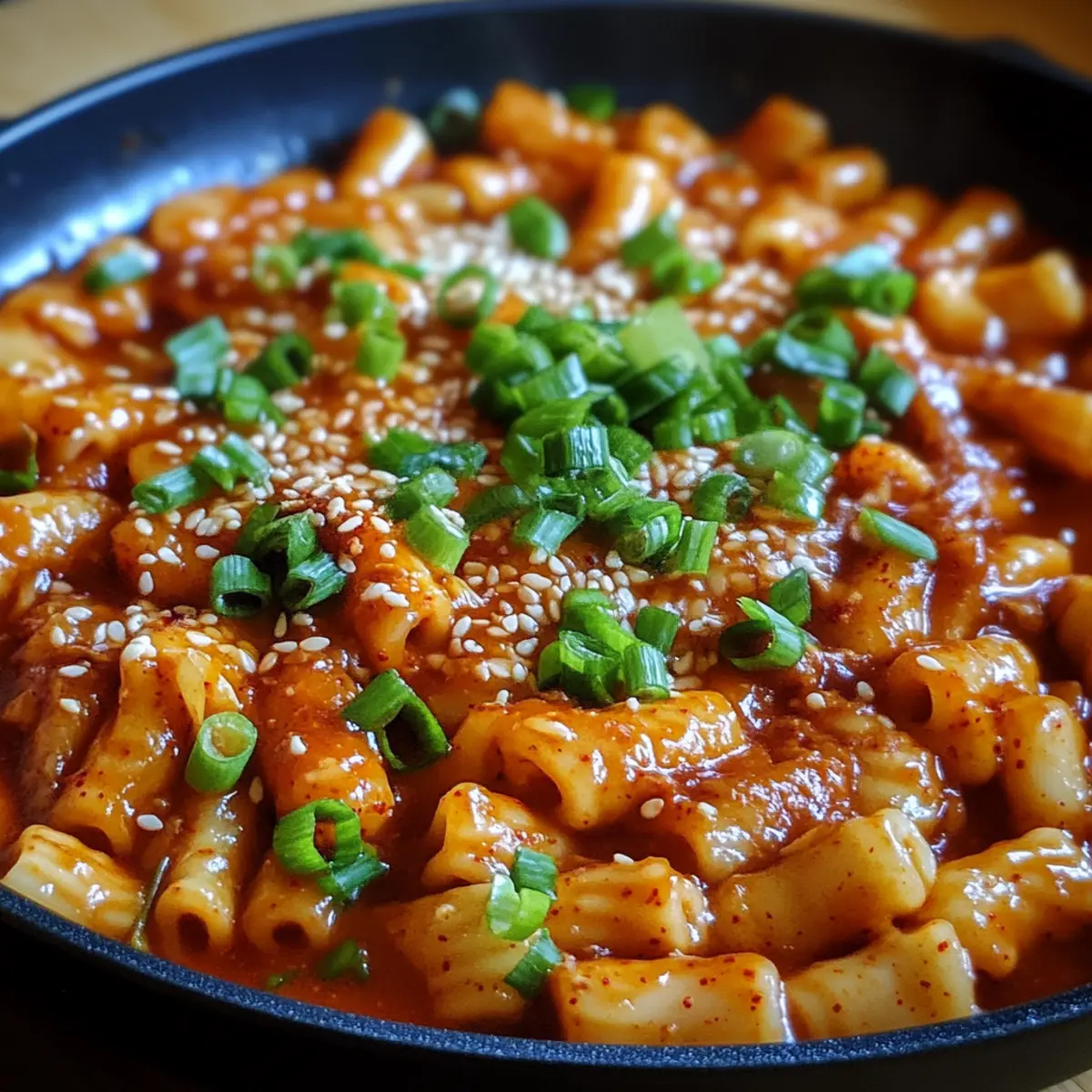
Rabokki – Ramen with Tteokbokki Recipe FAQs
What kind of rice cakes should I use for Rabokki?
Absolutely! You should look for instant tteokbokki rice cakes, which are commonly available in Korean grocery stores. They have a delightful chewy texture that is crucial for this dish. If you can’t find them, you can substitute them with thick pasta, though the chewy element will be different.
How should I store leftover Rabokki?
Very simple! Place any leftover Rabokki in an airtight container and store it in the refrigerator for up to 2 days. When you’re ready to enjoy it again, I recommend reheating it in a pot with a splash of water to keep it from drying out and to maintain its savory sauce.
Can I freeze Rabokki?
Yes, you can! However, it’s best to freeze it without the noodles. Transfer the Rabokki (excluding ramen) into a freezer-safe container for up to 1 month. When you’re ready to eat, simply thaw in the refrigerator overnight and reheat on the stove, adding fresh ramen noodles during the last few minutes of cooking.
How do I adjust the spiciness of Rabokki?
Great question! If you find your dish is too spicy, you can balance it out by adding a bit more sugar to the sauce. Alternatively, you can reduce the amount of gochugaru and gochujang when mixing the sauce. Start with a little and progressively add more until you reach your desired heat level.
Is Rabokki suitable for vegetarians?
Absolutely! You can easily make Rabokki vegetarian by omitting the fish cakes and hard-boiled eggs. Instead, consider adding more vegetables such as mushrooms or zucchini for extra flavor and heartiness, making it a delightful option for plant-based eaters!
Can I make Rabokki gluten-free?
Definitely! To make it gluten-free, substitute soy sauce with tamari, which has a similar flavor profile. Ensure that your rice cakes are also gluten-free, as some brands may contain wheat. With these swaps, you can enjoy a tasty and comforting bowl of Rabokki without worry!
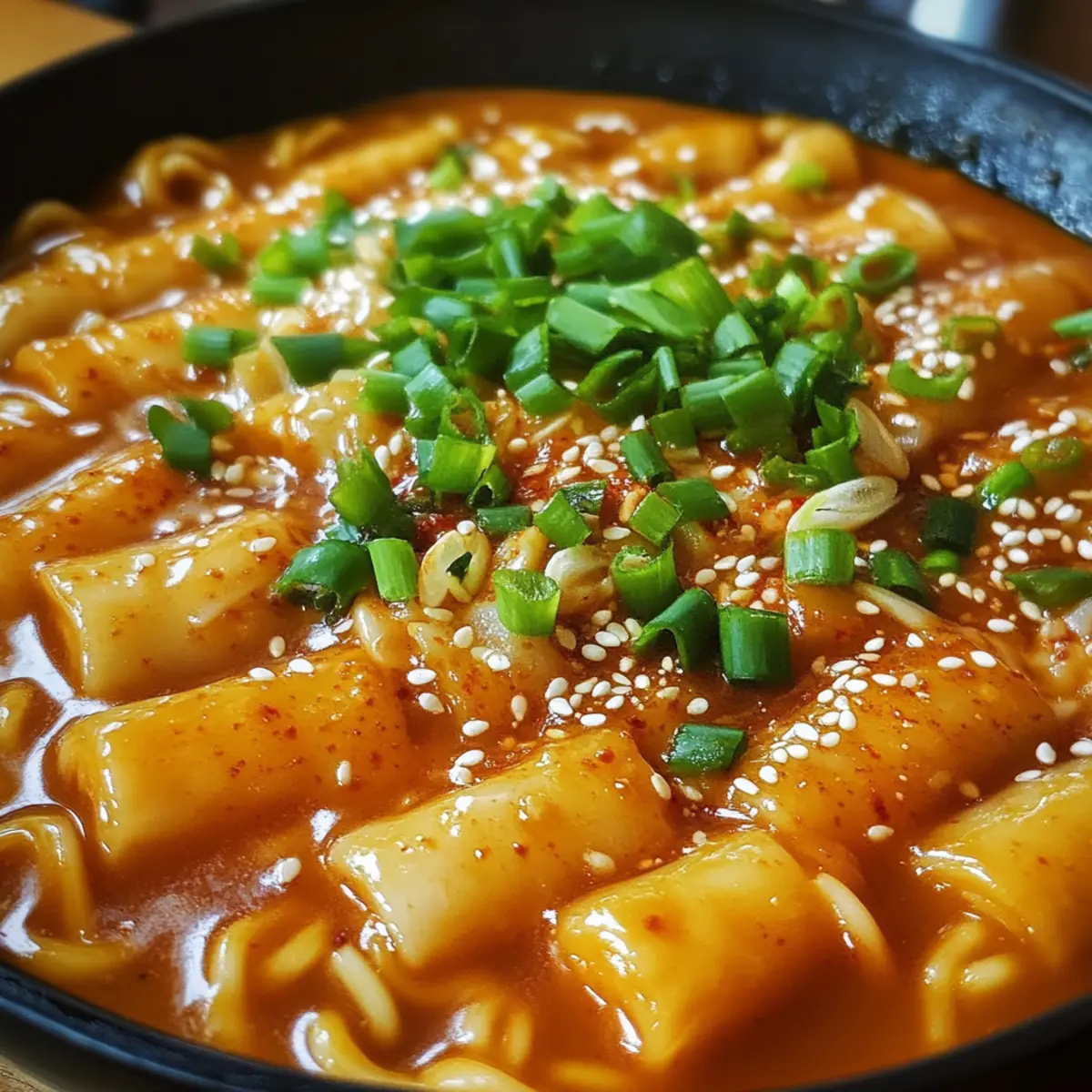
Spicy Rabokki - Ramen with Tteokbokki for Ultimate Comfort
Ingredients
Equipment
Method
- In a mixing bowl, combine soy sauce, sugar, gochugaru, gochujang, and minced garlic. Stir until the sugar dissolves and set aside.
- In a large pot, bring 3½ cups of water to a boil and add the anchovy stock tablets. Stir until dissolved.
- Once boiling, add the prepared sauce and let it simmer for 3-5 minutes.
- Add chopped cabbage and green onions, followed by rice cakes. Simmer for 8-10 minutes until cabbage is tender.
- Create a space in the pot for the protein, adding fish cakes and halved hard-boiled eggs. Heat through for 3-4 minutes.
- Place ramen noodles in the center, cover, and simmer for 3-4 minutes until tender.
- Serve hot, garnished with chopped green onions and white sesame seeds.
Leave a Reply