
As I sat down to enjoy a steaming bowl of Rabokki, the delightful fusion of chewy tteokbokki rice cakes and tender ramen noodles reminded me of cozy nights filled with laughter and warmth. This Spicy Rabokki – Ramen with Tteokbokki isn’t just a quick meal; it’s a comforting hug in a bowl, drenched in a spicy gochugaru and gochujang sauce that dances on your taste buds. Perfect for lunch, dinner, or those late-night cravings, this dish is easy to whip up and sure to impress. Plus, it can be customized to fit your taste preferences, giving you a fun twist on traditional Korean cuisine. Are you ready to dive into a culinary adventure that brings the heart of Korea to your kitchen?
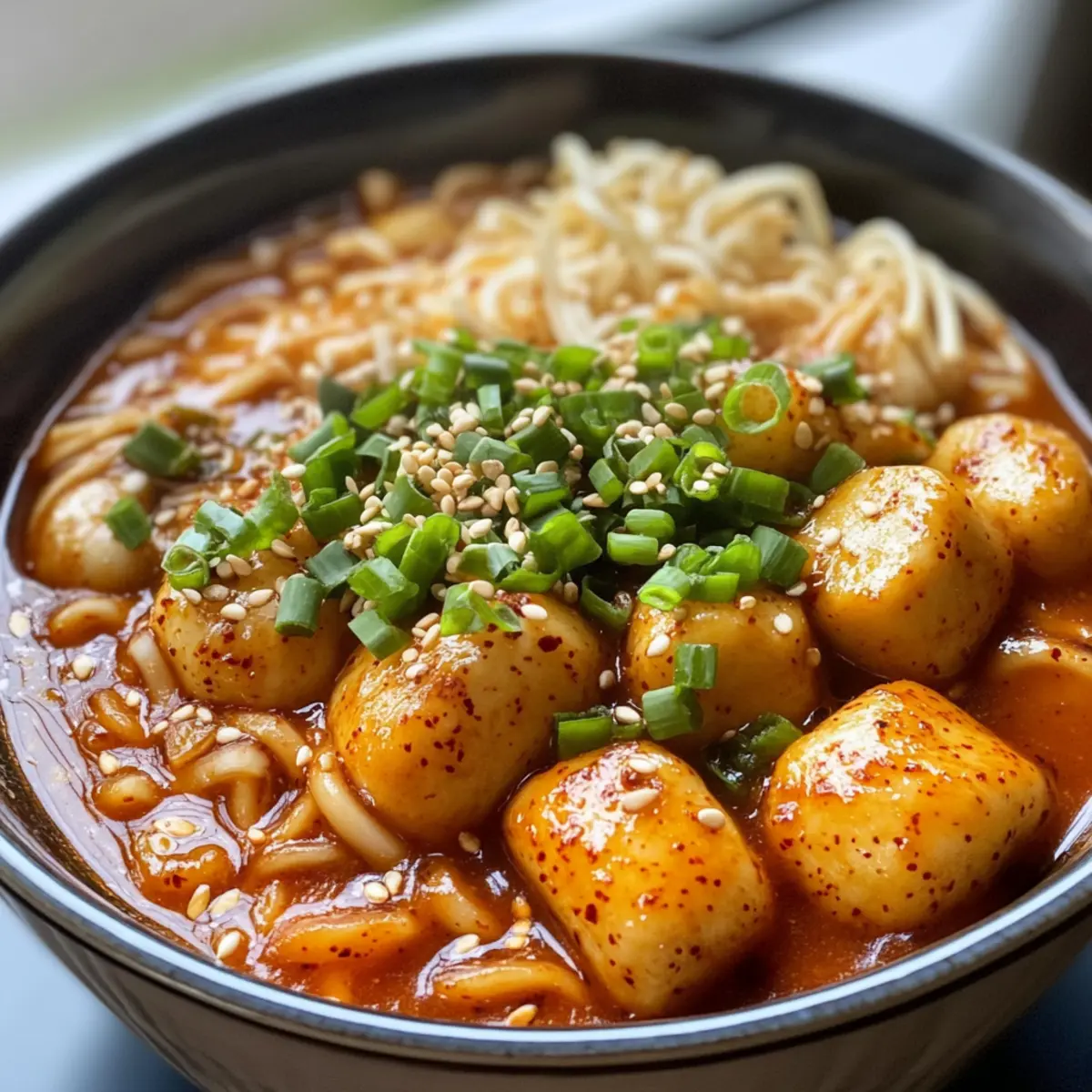
Why is Rabokki the ultimate comfort meal?
Unforgettable Flavor: This dish is bursting with the boldness of gochugaru and gochujang, creating a fusion of spicy goodness that will tantalize your taste buds.
Quick and Easy: In just 30 minutes, you can savor this delightful meal, making it perfect for those busy weeknights or spontaneous cravings.
Versatile Ingredients: Feel free to mix and match—swap fish cakes for tofu, add your favorite veggies, or throw in a soft-boiled egg for extra richness!
Crowd Pleaser: Whether you’re hosting friends or enjoying a cozy dinner for one, Rabokki is bound to win hearts, just like my Dumpling Ramen Bowl does!
Cultural Delight: Experience the essence of Korean street food from the comfort of your home with this comforting classic that feels like a warm embrace.
Rabokki Ingredients
For the Sauce
• Soy Sauce – Provides saltiness and depth of flavor. Use tamari for a gluten-free option.
• Sugar – Balances saltiness and enhances overall flavor. Adjust quantity to taste.
• Gochugaru (Korean chili powder) – Adds heat and a smoky flavor. Substitute with paprika if unavailable.
• Gochujang (Korean chili paste) – Contributes spice and umami. Can use Sriracha as a substitute, but adjust quantity for heat level.
• Minced Garlic – Infuses the sauce with aromatic flavor. Fresh garlic is preferable, but garlic powder can be used in a pinch.
For the Broth
• Anchovy Stock Tablets – Base for the broth. Use vegetable broth cubes for a vegetarian version.
For the Veggies & Toppings
• Cabbage – Adds crunch and freshness. Substitutes: bok choy or spinach.
• Green Onion – Used for garnish and flavor enhancement. Substitute with chives if needed.
For the Main Ingredients
• Rice Cakes (Tteokbokki) – The main ingredient contributing chewiness. Can be substituted with thick noodles if necessary.
• Fish Cakes – Adds texture and protein. Omit for a vegetarian version or replace with tofu.
• Hard Boiled Eggs – Offers creaminess and protein. Optional for vegan diets.
• Ramen Noodles – Main carbohydrate. For gluten-free options, use rice noodles.
These ingredients combine to create the delicious Rabokki, a satisfying dish sure to please any home chef!
Step‑by‑Step Instructions for Rabokki – Ramen with Tteokbokki
Step 1: Prepare the Sauce
In a bowl, whisk together 3 tablespoons of soy sauce, 2 tablespoons of sugar, 1 tablespoon of gochugaru, 2 tablespoons of gochujang, and 1 tablespoon of minced garlic until fully combined. Set this fragrant mixture aside, as it will become the flavorful backbone of your Rabokki.
Step 2: Boil the Broth
In a large pot, bring 3½ cups of water to a boil over medium-high heat. Once boiling, add two anchovy stock tablets and stir until dissolved, creating a savory base. You should see a gentle rolling boil to ensure maximum flavor infusion before introducing the sauce.
Step 3: Combine Sauce and Broth
Reduce the heat to medium, then slowly pour the prepared sauce into the boiling broth. Stir well to ensure all ingredients meld together, creating a beautiful, rich color and aroma. Allow this mixture to simmer for approximately 2 minutes for the flavors to fully develop.
Step 4: Add Vegetables and Rice Cakes
Next, stir in about 1 cup of chopped cabbage and 200 grams of tteokbokki rice cakes into the pot. Let everything simmer for 8-10 minutes, stirring occasionally. The sauce should begin to thicken, and the rice cakes will soften, becoming tender and chewy—this is what you want for your Rabokki!
Step 5: Incorporate Protein
Making space in the center of the pot, gently add any desired fish cakes and peeled hard-boiled eggs. Give them a moment to warm through, about 2-3 minutes. This step enhances the overall heartiness of your Rabokki, adding delightful texture.
Step 6: Cook the Ramen Noodles
Now it’s time to add the ramen noodles! Place them right in the center of the pot over the bubbling mixture. Cover the pot and let it simmer for an additional 3-4 minutes, or until the noodles are tender and cooked through. The sauce should continue to thicken around the noodles.
Step 7: Final Touches
When everything is perfectly cooked, remove the pot from heat. Garnish your Rabokki with freshly chopped green onions and sprinkle some white sesame seeds on top for added crunch. The vibrant colors and inviting scents should be a feast for the eyes and nose alike!
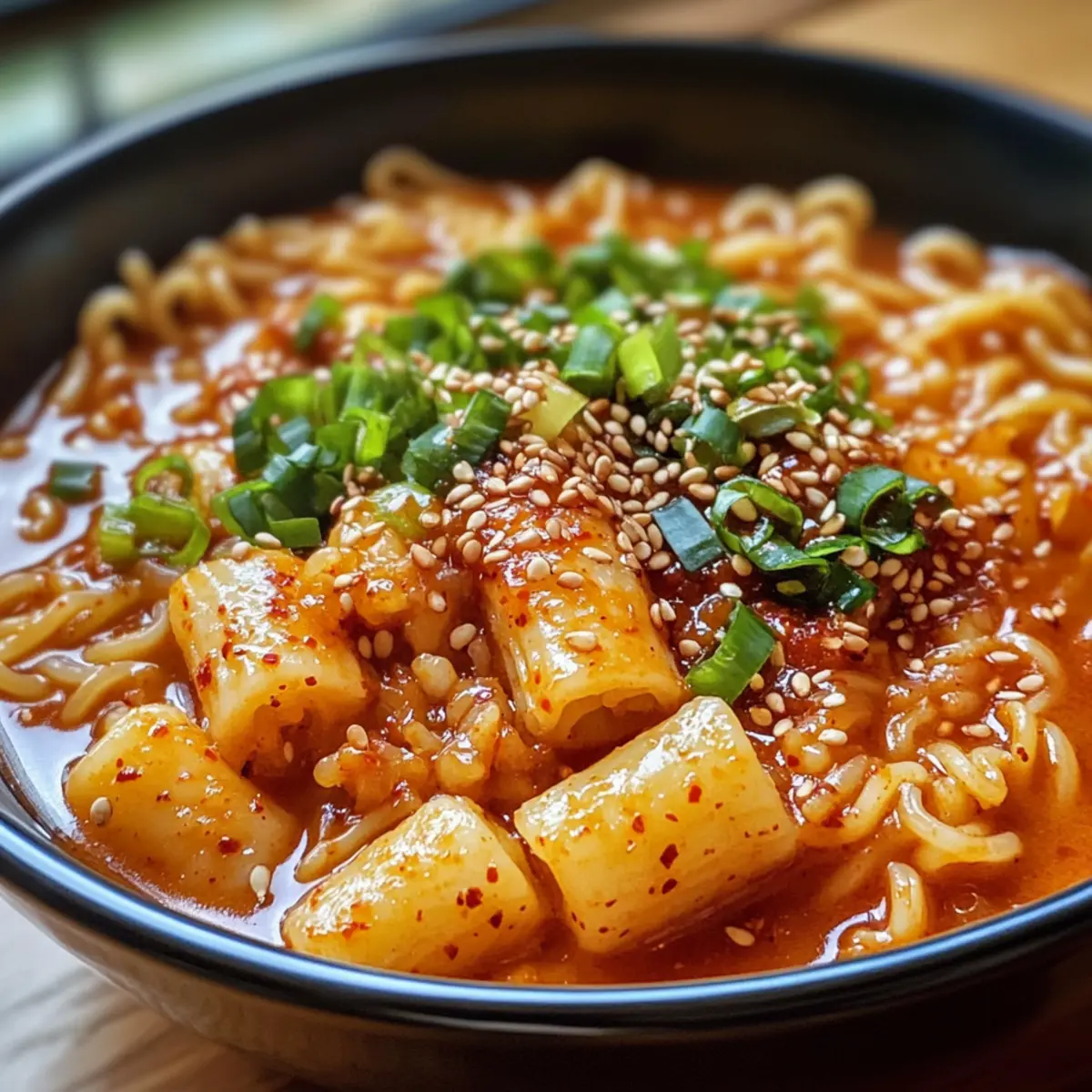
Rabokki – Ramen with Tteokbokki Variations
Feel free to get creative with this Rabokki recipe; each twist can bring a new, exciting flavor to your table!
-
Vegetarian Delight: Omit fish cakes and substitute with tofu to cater to a veggie-loving crowd. Tofu absorbs the flavors beautifully.
-
Creamy Addition: Stir in cream cheese or mozzarella at the end for a luscious, cheesy richness that complements the spiciness.
-
Extra Vegetables: Toss in sliced bell peppers or spinach for a nutritional boost that adds color and freshness to the dish.
-
Gluten-Free Switch: Opt for gluten-free ramen or thick rice noodles instead of traditional ramen to keep this dish inclusive for everyone.
-
Spicy Kick: If you’re a heat seeker, add sliced jalapeños or chili flakes alongside the gochugaru for an extra fiery punch.
-
Flavor Boost: Enhance the umami by mixing in sliced shiitake mushrooms for a hearty texture and earthy depth, much like in my Tortellini Soup with Sausage.
-
Fusion Twist: Experiment with a splash of teriyaki sauce for a delightful flavor fusion and sweetness that mellows the spice.
-
Savory Egg Drop: Drizzle beaten eggs into the simmering broth for a comforting, silky texture that feels like a warm hug, reminiscent of my Chicken Ramen Garlic.
These variations help tailor the dish to your liking, making every bowl of Rabokki truly your own!
Expert Tips for Making Rabokki
-
Achieve Perfect Broth: Ensure the broth reaches a rolling boil before adding ingredients; this helps extract the best flavors for your Rabokki.
-
Customize the Spice: Tailor the spiciness by adjusting the amounts of gochugaru and gochujang. Test the heat and add more if you’re feeling bold!
-
Don’t Overcook Noodles: Add ramen noodles towards the end of cooking to avoid mushiness. They should be tender yet still have a slight bite.
-
Texture Matters: Stir occasionally while simmering the rice cakes and vegetables to ensure even cooking and prevent them from sticking to the bottom of the pot.
-
Add Fresh Herbs: For extra depth of flavor, consider adding fresh cilantro or basil just before serving to complement the spicy sauce’s richness.
-
Experiment with Additions: Don’t hesitate to add your favorite toppings, like kimchi or sliced mushrooms, enhancing your Rabokki for a unique twist.
What to Serve with Spicy Rabokki – Quick Ramen with Tteokbokki
As you savor each spicy bite of your Rabokki, consider these delightful accompaniments that enhance the whole dining experience.
-
Kimchi: The tangy and spicy notes of kimchi provide a perfect contrast to the rich Rabokki, adding a refreshing crunch. It cleanses the palate, elevating each spoonful.
-
Pickled Vegetables: Bright and vinegary, pickled veggies bring a vibrant flavor and texture that beautifully balances the heat of the dish. Their crispness can revive your taste buds for round two!
-
Fried Egg: Topped over your bowl, a fried egg adds creaminess and richness. The yolk breaks and swirls into your Rabokki, creating a luscious mouthfeel that comforts the soul.
-
Crunchy Seaweed Sheets: Crispy nori or flavored seaweed snacks offer a delightful crunch and umami boost. Sprinkle them on top to add layers of flavor, creating a fun textural contrast!
-
Spicy Fish Cake Skewers: Enhance your meal with skewers of spicy fish cakes. They mirror the Rabokki’s ingredients while offering a chewy bite that complements the noodles and rice cakes.
-
Refreshing Cucumber Salad: A light and crunchy cucumber salad gives a cooling release from the spice, refreshing your palate. With a sprinkle of sesame seeds, it adds both flavor and visual appeal.
-
Iced Korean Barley Tea: To wash down the heat, a glass of chilled barley tea is the ideal beverage. Its nutty flavor and refreshing chill provide a soothing contrast to the spices in your meal.
-
Sweet Red Bean Dessert: Wrap up your meal with a small serving of sweet red bean paste or mochi for a delightful finish. Its sweetness creates a harmonious end to the spicy flavors, leaving you satisfied and content.
Storage Tips for Rabokki
Fridge: Store any leftover Rabokki in an airtight container for up to 2 days. The flavors will meld and intensify, but be sure to eat it quickly for the best texture!
Freezer: For longer storage, freeze the sauce and cooked ingredients separately in airtight containers for up to 1 month. This helps maintain the chewy texture of the rice cakes and ramen.
Reheating: When ready to enjoy, simply reheat in a pot on the stovetop with a splash of water to loosen the sauce. Stir gently until heated through, and feel the comforting warmth of your Rabokki again!
Room Temperature: Serve freshly made Rabokki hot, and if you have any leftovers, do not let them sit at room temperature for more than 2 hours to ensure food safety.
Make Ahead Options
These Spicy Rabokki – Ramen with Tteokbokki are perfect for busy weeknights and meal prep! You can prepare the sauce (soy sauce, sugar, gochugaru, gochujang, and minced garlic) up to 24 hours in advance; just store it in an airtight container in the refrigerator. Additionally, chop the cabbage and keep it chilled until you’re ready to cook. For best results, do not cook the fish cakes or ramen noodles until you are ready to serve to ensure they maintain their texture and flavor. When you’re set to enjoy your Rabokki, simply bring the broth to a boil, add the prepared sauce and veggies, and follow the remaining steps as outlined. You’ll achieve that warm, comforting dish with minimal effort!
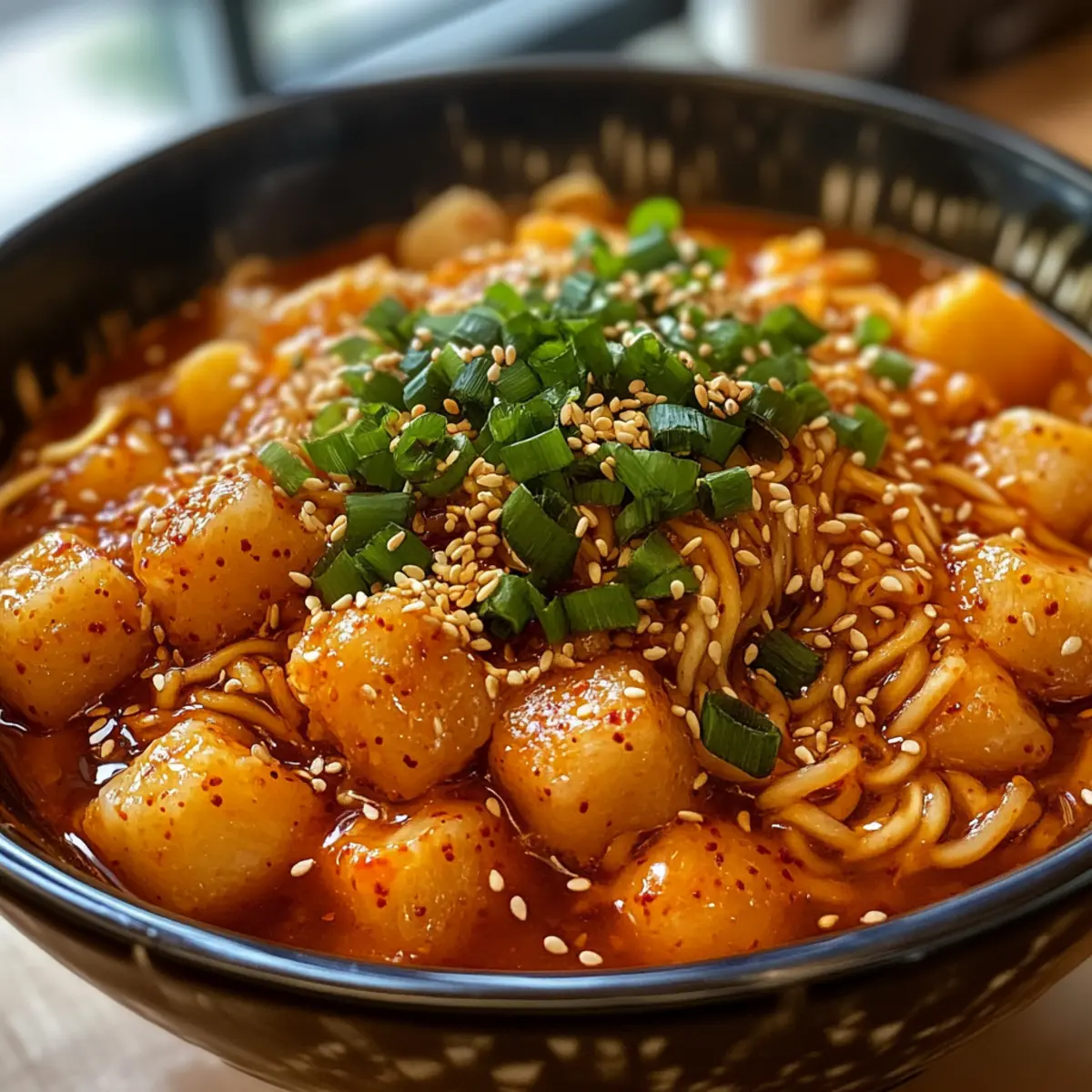
Rabokki – Ramen with Tteokbokki Recipe FAQs
What is the best way to select ingredients for Rabokki?
Absolutely! When selecting ingredients, look for rice cakes (tteokbokki) that are soft and pliable without any dark spots. Fresh vegetables like cabbage should be crisp, while the gochugaru and gochujang should be bright red, indicating freshness. For soy sauce, opt for a brand that has minimal preservatives for the best flavor.
How long can I store leftover Rabokki in the refrigerator?
Leftover Rabokki can be stored in an airtight container in the refrigerator for up to 2 days. The flavors meld together, actually improving the taste. When reheating, add a splash of water to ensure the sauce stays nice and silky!
Can I freeze Rabokki and how do I do it?
Sure! To freeze Rabokki, I recommend separating the sauce and cooked noodles from the rice cakes. Place them in separate airtight containers or bags. You can freeze the sauce and cooked ingredients for up to 1 month. When you’re ready to enjoy, thaw in the refrigerator overnight and reheat gently on the stovetop, adding a splash of water to loosen the sauce as needed.
What should I do if my sauce is too thick?
If your sauce becomes too thick, just add a little broth or water—about ¼ cup at a time—and stir until you reach the desired consistency. This should help loosen it without compromising flavor. Remember to heat it gently while stirring to integrate the additional liquid seamlessly.
Does Rabokki cater to any dietary restrictions?
Definitely! For a vegetarian or vegan version, substitute the anchovy stock with vegetable broth and omit fish cakes or replace them with tofu. Always check your sauces for allergens as some may contain gluten or seafood ingredients, and choose gluten-free noodles if needed.
How long should I cook the ramen noodles in Rabokki?
When adding ramen noodles, I find that 3 to 4 minutes is perfect for getting them tender yet still slightly chewy. Cover the pot to trap steam, ensuring they cook evenly. Just make sure to stir occasionally for an even cook!
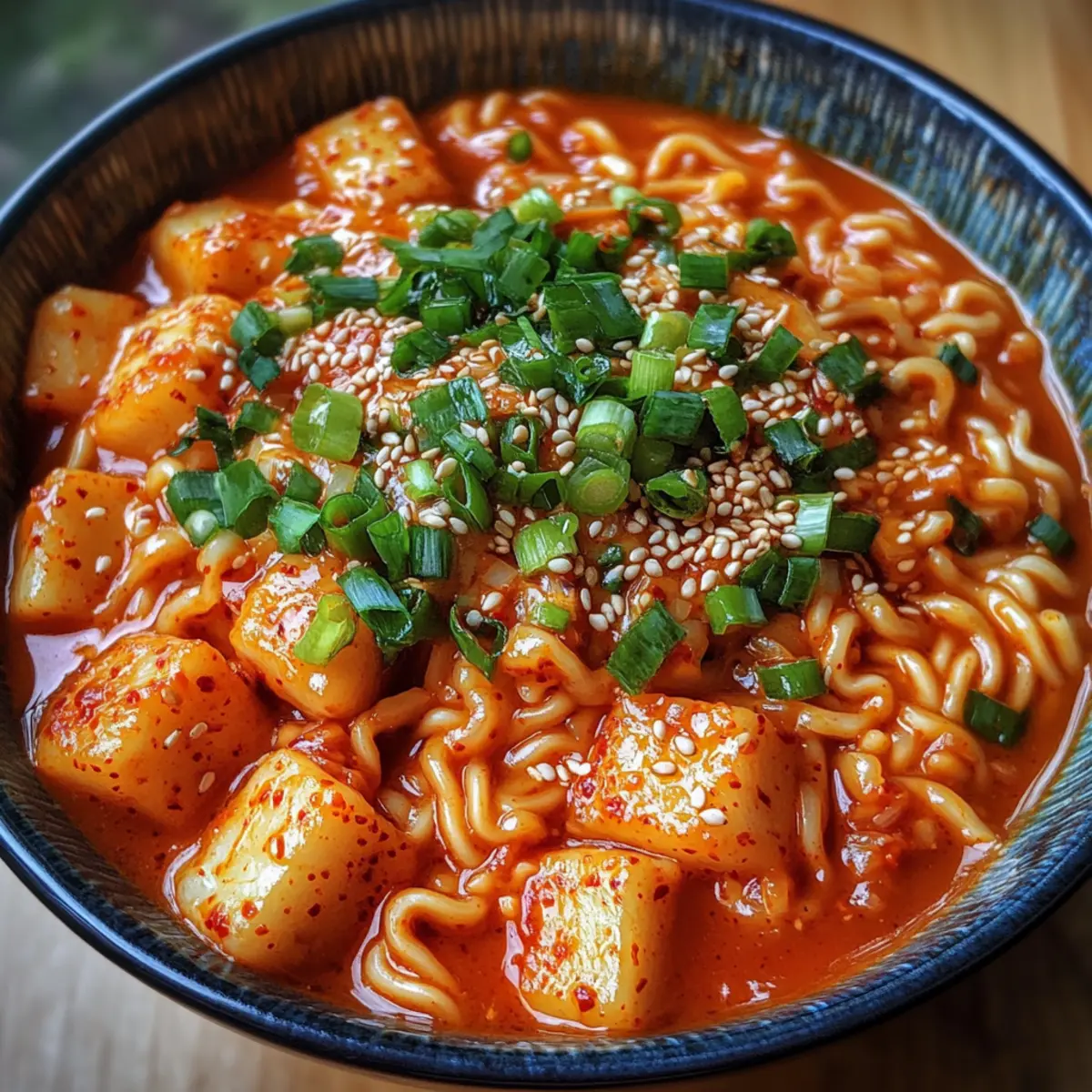
Irresistible Rabokki - Ramen with Tteokbokki Easy Comfort Food
Ingredients
Equipment
Method
- In a bowl, whisk together soy sauce, sugar, gochugaru, gochujang, and minced garlic until fully combined.
- In a large pot, bring 3½ cups of water to a boil. Once boiling, add anchovy stock tablets and stir until dissolved.
- Reduce heat to medium and pour the prepared sauce into the boiling broth. Stir well and simmer for 2 minutes.
- Stir in chopped cabbage and tteokbokki rice cakes. Let simmer for 8-10 minutes, stirring occasionally.
- Add fish cakes and hard-boiled eggs to the center of the pot. Warm through for about 2-3 minutes.
- Add the ramen noodles in the center of the pot. Cover and simmer for an additional 3-4 minutes.
- Remove from heat and garnish with chopped green onions and sesame seeds.
Leave a Reply